Stop reacting to flare-ups. Start predicting them.





Free to download. Your data stays yours.
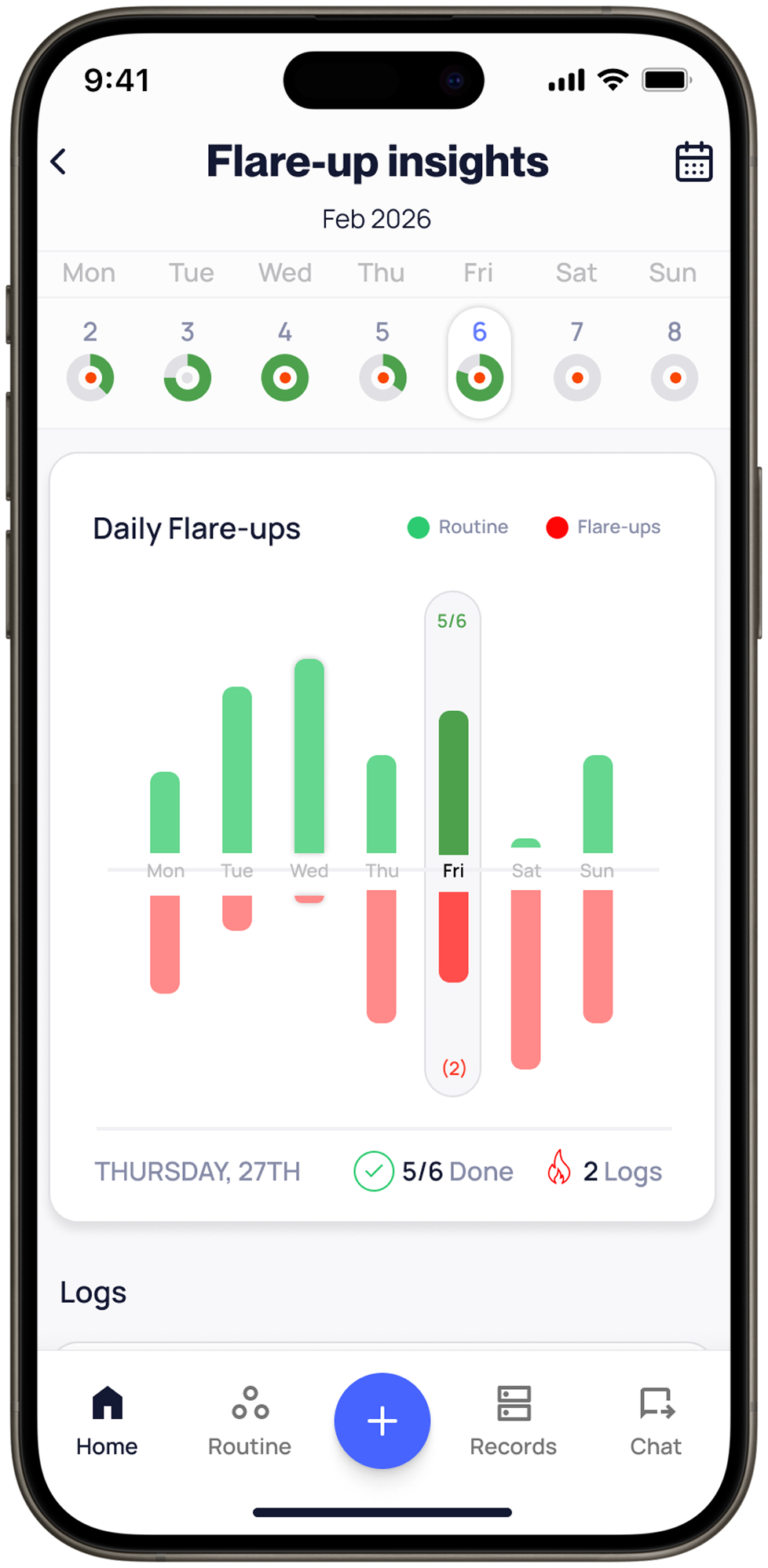
You know something triggers it. You just can’t figure out what.
Triggers hide in plain sight
Was it the food? The stress? The bad sleep? When a flare-up hits, you retrace your steps but never find the real cause because the pattern spans days, not hours.
The same cycle, over and over
Good week, bad week, good week, bad week. You can feel the rhythm but you can’t break it because you don’t know which variable to change.
By the time you notice, it’s too late
Flare-ups don’t announce themselves. By the time symptoms hit, you’re already in it. What if you could catch the warning signs 24 to 48 hours earlier?
From guessing to knowing what’s coming
Track what matters
Log symptoms, meals, sleep, stress, medications, and activity. xHeal also pulls data from Apple Health and your wearables automatically.
xHeal finds the patterns
Our AI cross-references 250+ parameters over time to identify triggers and early warning signals unique to your body.
Get warnings before it hits
When xHeal detects a familiar pattern forming, it alerts you with enough time to intervene, change course, and potentially prevent the flare-up entirely.
Patterns your Digital Twin can uncover for you
“Why do I always crash on Wednesdays?”
xHeal maps your weekly patterns and shows how Monday’s choices ripple into Wednesday’s symptoms.
“Is gluten actually a trigger for me?”
Stop guessing. xHeal correlates your food logs with symptom timing to confirm or rule out suspected triggers.
“Does poor sleep make my symptoms worse?”
See exactly how sleep quality, duration, and timing affect your symptom severity the next day.
“What combination of factors sets me off?”
Most flare-ups have multiple triggers. xHeal identifies the specific combinations that precede your worst days.
“Am I improving or just having a good week?”
Track your flare-up frequency and severity over months. See real progress, not just random variation.
“What should I avoid this week?”
Based on your current data trends, xHeal highlights the highest-risk factors for this week and suggests what to watch.
Other apps track symptoms. xHeal predicts what’s coming.
Wellness trackers help you record how you feel. That’s useful. But recording isn’t preventing. xHeal goes further: it cross-references your symptoms with your sleep, stress, nutrition, activity, and clinical data to find patterns and warns you before a flare-up develops.
Log symptoms
Track daily habits
Import medical records
Lab result analysis
AI pattern detection
Early flare-up warnings
Correlate across data types
Works without proprietary hardware
Clinical AI reasoning (WHO, ADA, EASD)
Generate specialist reports
WHOOP tracks your strain. Bevel tracks your recovery. Olivia organizes your records. Only xHeal connects it all to predict what’s coming.
They stopped guessing. xHeal showed them why.
“I’ve had IBS for years. xHeal showed me that my flare-ups spike 48 hours after combining dairy and poor sleep. Not one or the other – both together.”
 Larry K., 38
“xHeal caught a pattern I missed for 3 years: my migraines correlate with low HRV plus skipped meals. My neurologist confirmed it makes sense.”
 Deborah W., 52
“Got a warning on Tuesday that my pattern looked like a flare-up was building. Changed my routine, slept more, and Thursday was fine. That never happens.”
 Howard J., 44
How xHeal protects your health data
Your patterns stay private
Flare-up data, triggers, and symptom logs are encrypted and visible only to you. We never share health patterns with third parties.
Clinical-grade pattern analysis
xHeal uses WHO, ADA, and EASD guidelines to interpret patterns, not generic wellness algorithms.
You control the data
Delete any symptom log, trigger, or pattern analysis at any time. Your data, your rules.
No data sold, ever
We don’t monetize your health data. Our business model is the product, not your personal information.
About flare-up detection
xHeal analyzes patterns across your symptoms, sleep, stress, nutrition, activity, and clinical data over time. When it detects a combination of factors that preceded previous flare-ups, it alerts you early.
It depends on your patterns. Some users see warnings 24 to 48 hours before a flare-up. The more data xHeal has, the earlier and more accurate the warnings become.
Flare-up detection works for any condition with recurring episodes: IBS, migraines, eczema, fibromyalgia, autoimmune conditions, and more. If it has a pattern, xHeal can find it.
No. xHeal identifies patterns and correlations in your data to help you and your care team understand triggers. It does not diagnose conditions or replace clinical care.
Pattern detection improves with more data. Most users start seeing initial insights within 2 to 4 weeks of consistent tracking.
Works even better with…
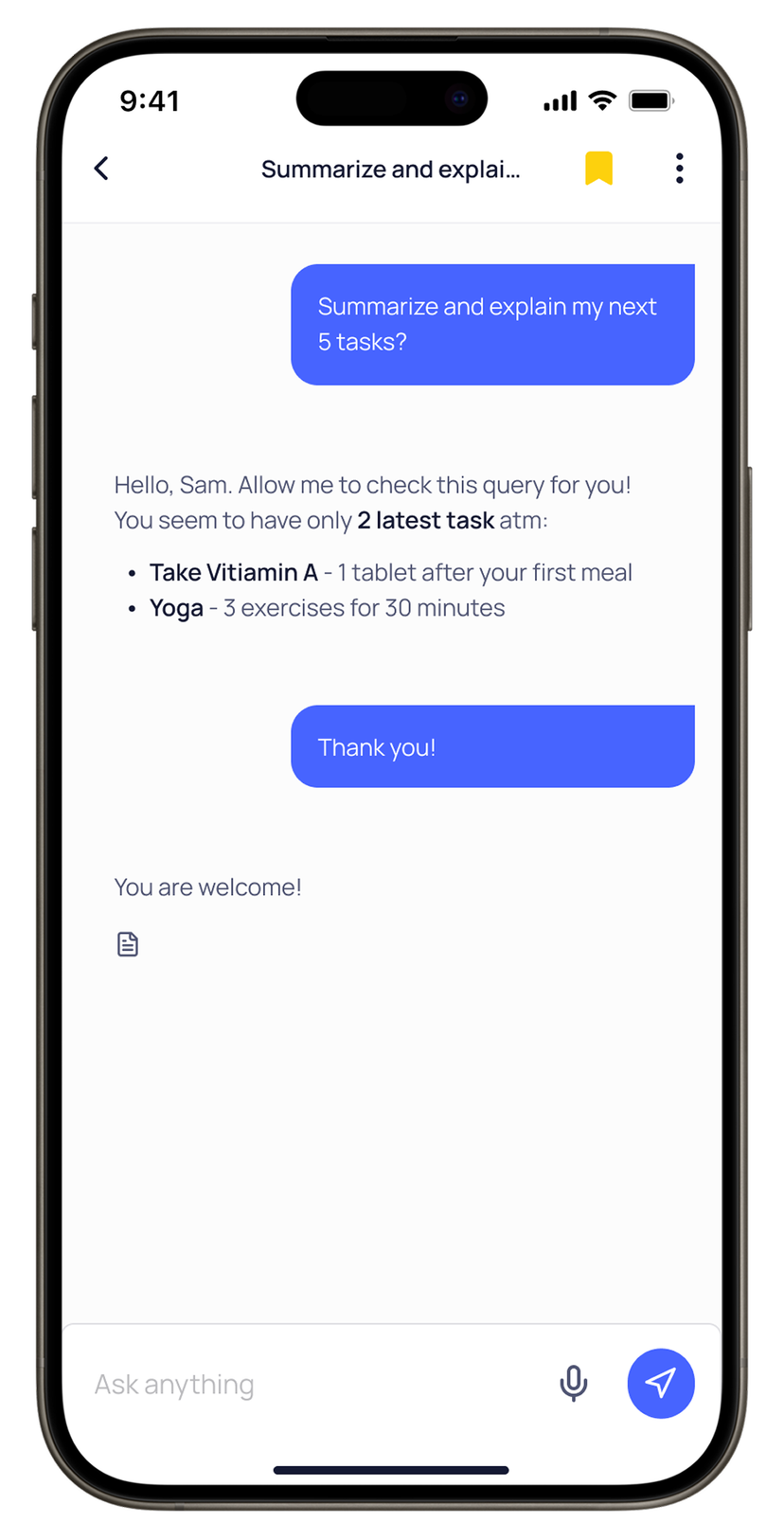
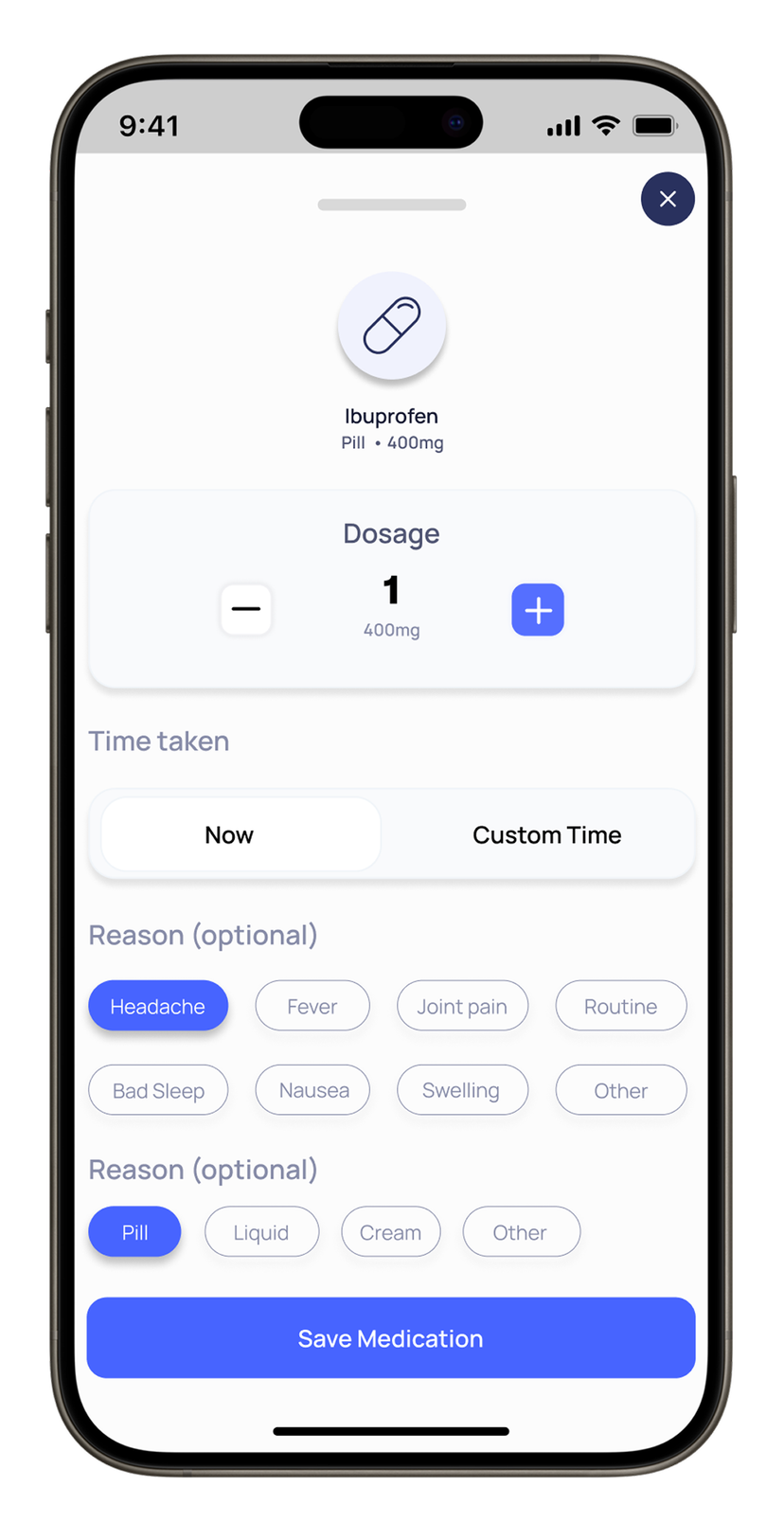
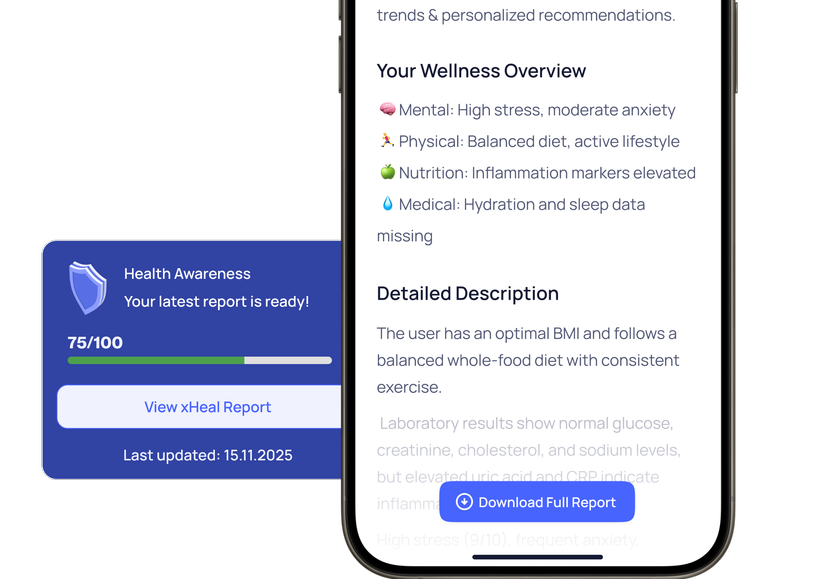
Know what’s coming. Before it hits.
Download xHeal and start uncovering the patterns behind your flare-ups.
Free to download. Your data stays yours.