Your health data is everywhere. Your answers are here.
Sleep, stress, recovery, strain, nutrition, activity, mood, genome, vitals, and more
Apple Health, wearables, lab PDFs, medical records, genomics, and daily logs







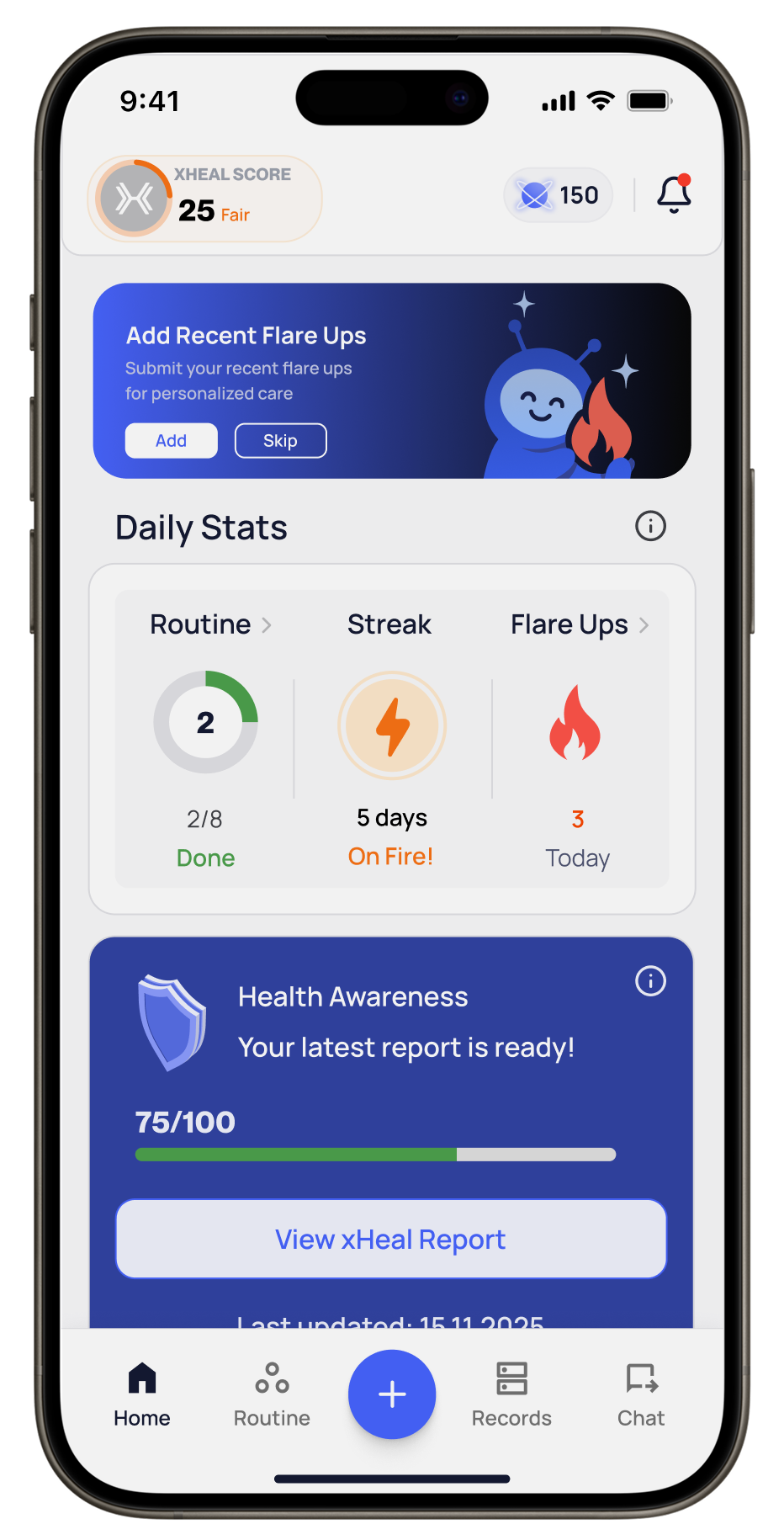
What changes when your health data works together
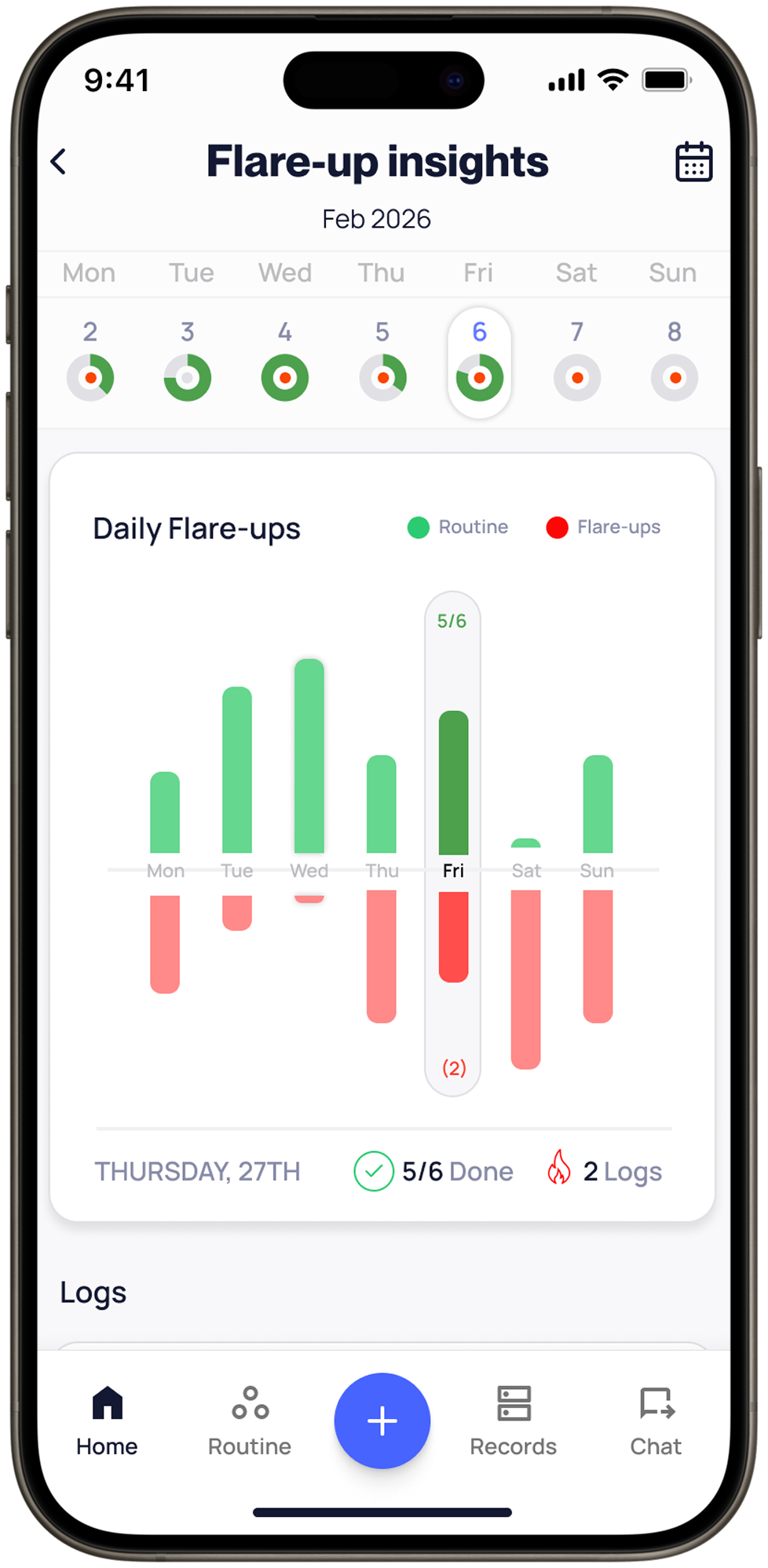
How xHeal works
Connect your health
Answer a few questions, sync your devices, and upload your records. Your full health profile in about 5 minutes.
Meet your Digital Twin
xHeal cross-references your clinical data, daily habits, and wearable trends. It learns what's normal for you and flags what's not.
See the difference
Real patterns, real outcomes. Here is what changes when your health data finally works together.
Everything your health app is missing
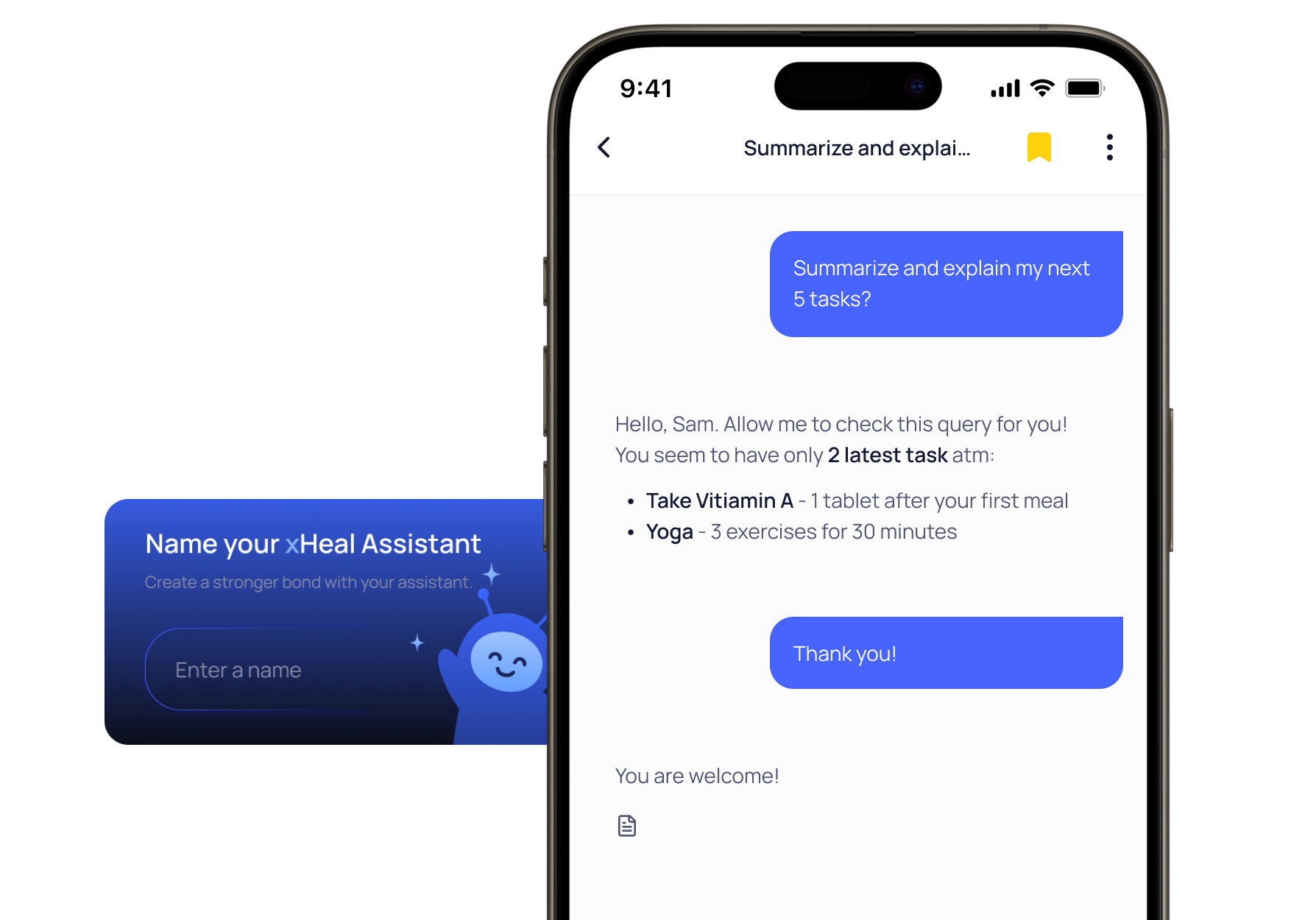
Chat With Your Health
Ask your Digital Twin anything about your vitals, your labs, your symptoms, your patterns. Get answers grounded in your actual health data, not generic web results.
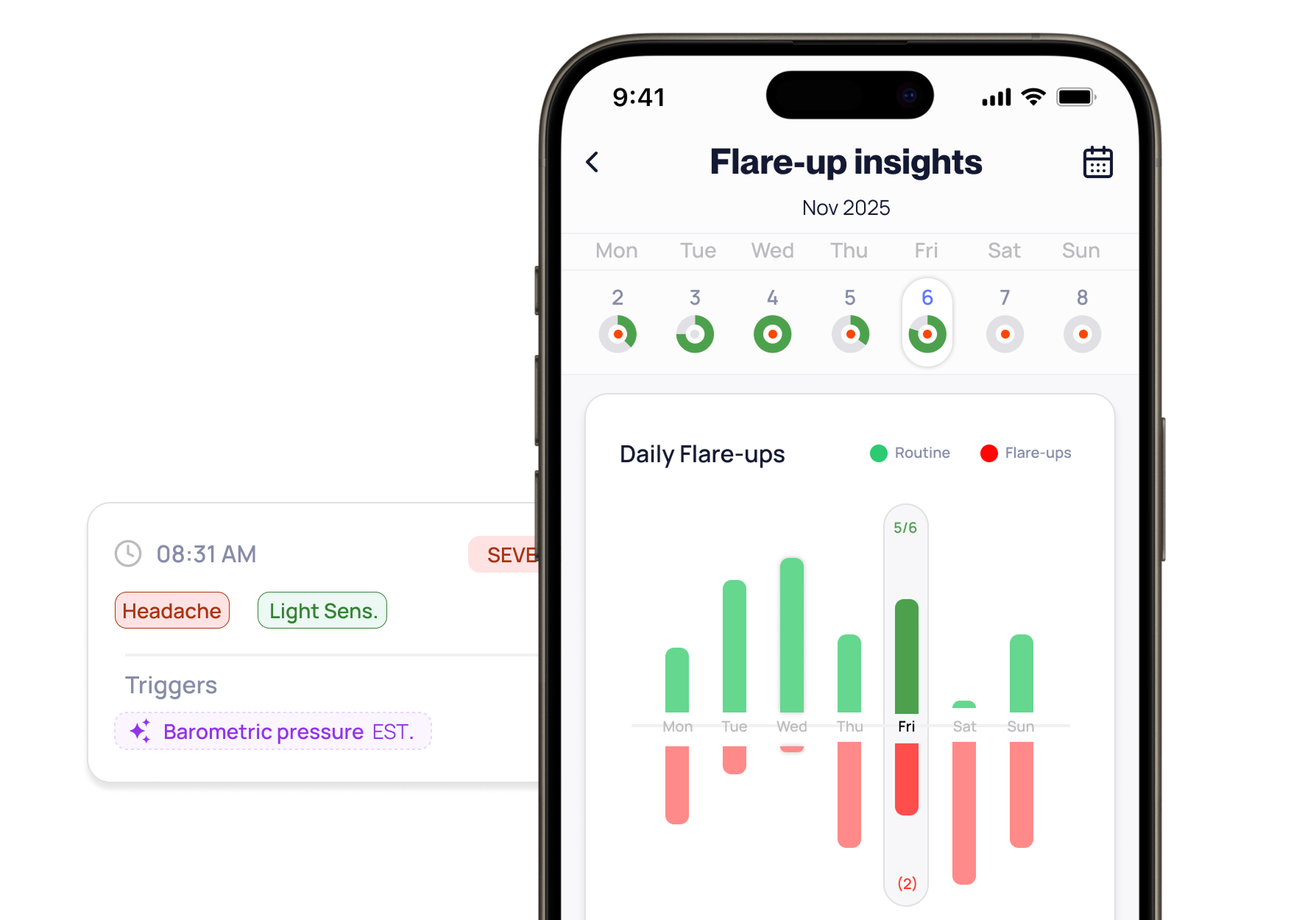
Flare-Up Trigger Patterns
xHeal cross-references your symptoms, sleep, stress, and activity to detect what triggers your flare-ups and warns you before the next one hits.
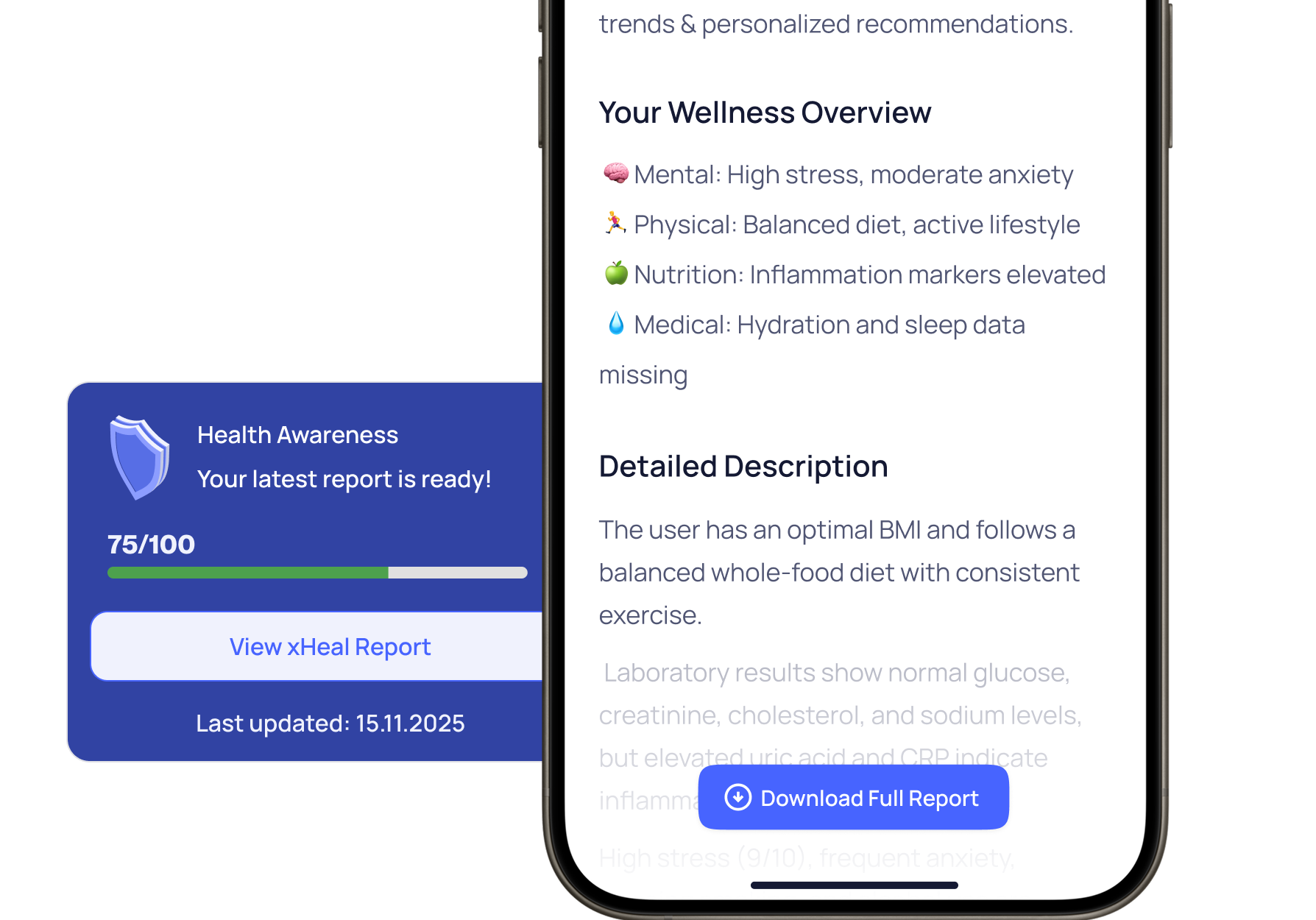
Health Awareness Score
A single 0-100 score that reflects your health across six domains. Know exactly where you stand and which area needs attention first.
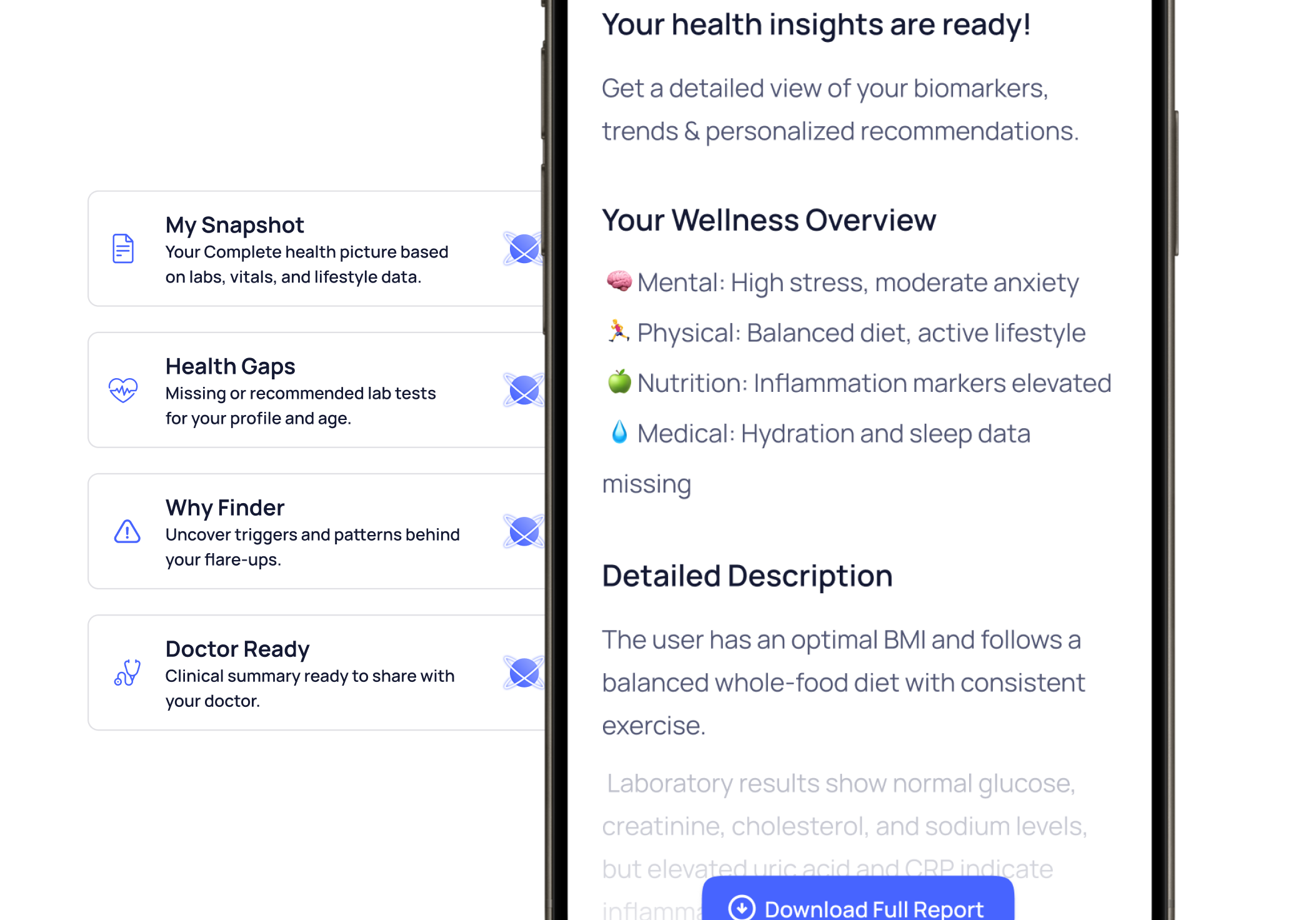
Specialist-Ready Reports
Four report types designed for doctors, nutritionists, trainers, and therapists. Walk into your next appointment with the context your care team has never had.
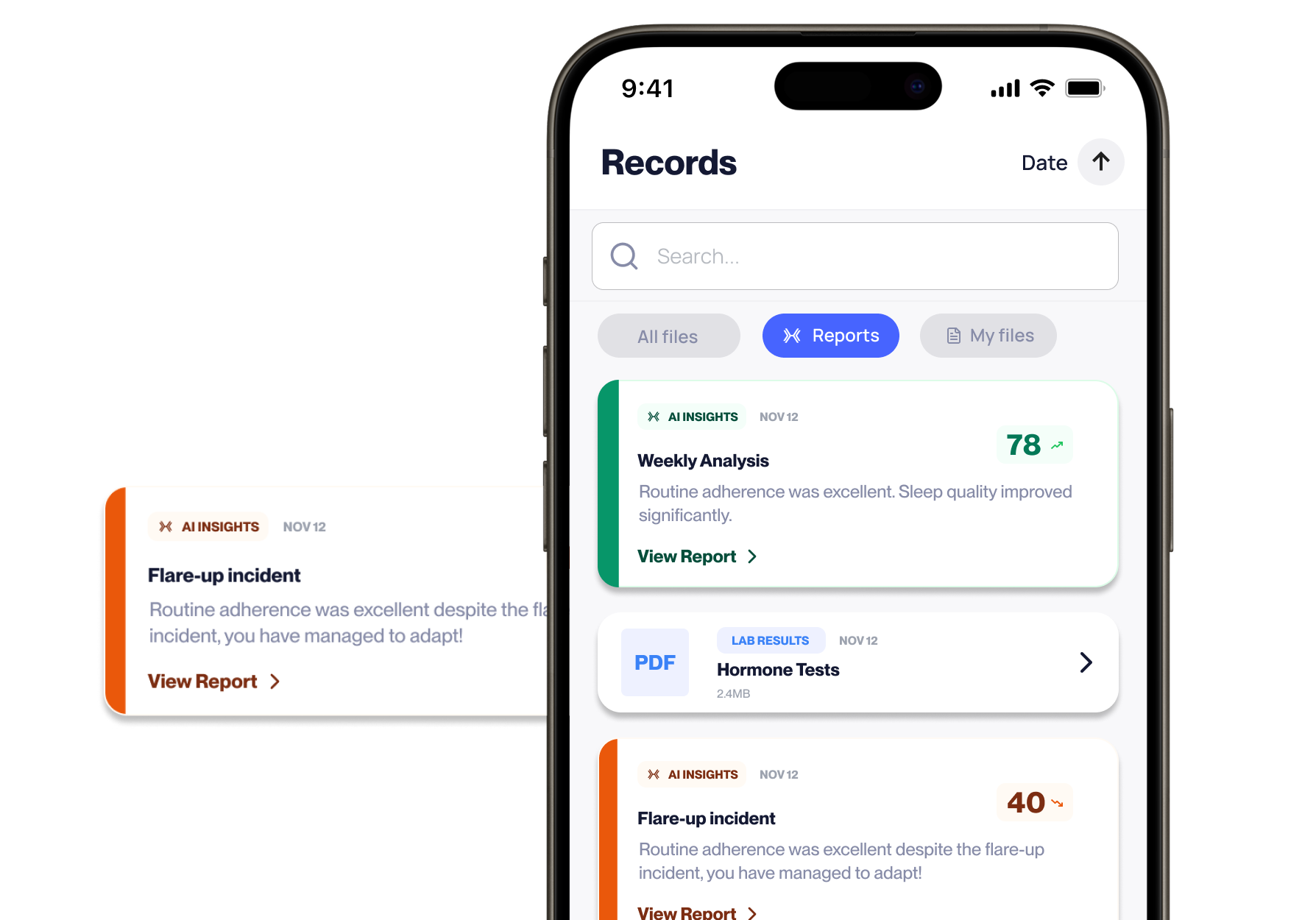
Health Timeline
Every medical record, lab result, and life event organized chronologically in one searchable place. Find anything in seconds.
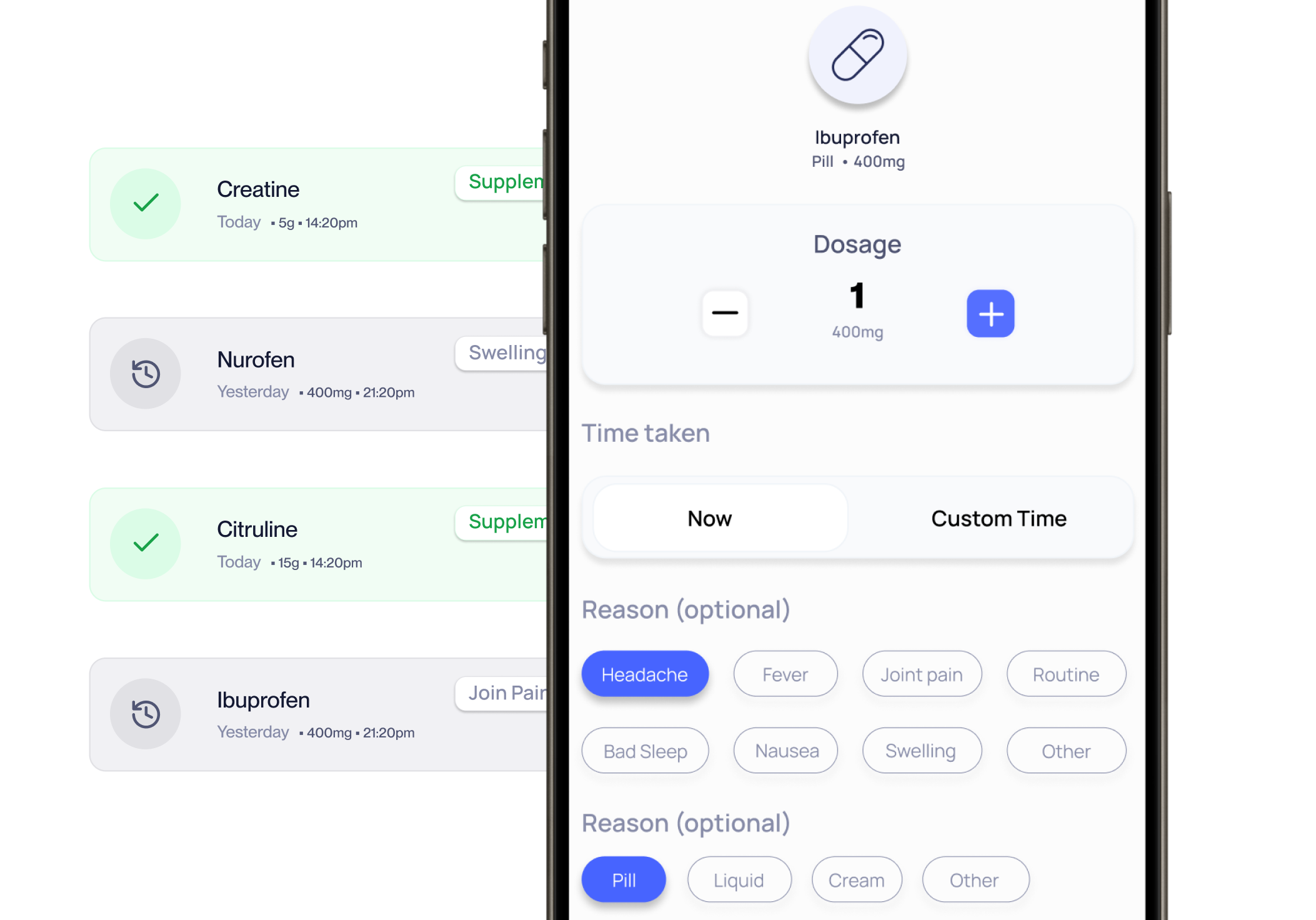
Log Life Events
Supplements, medications, diet changes, stress. Log the context your wearable can't capture. Every entry makes your Digital Twin smarter.
AI that reasons like a care team but knows your full story
Most health apps track a single metric. xHeal connects all of them.
Our AI interprets your data through clinical guidelines from the WHO, ADA, and EASD, the same standards your care team uses. But unlike any single specialist, your Digital Twin sees everything at once: your labs, your sleep, your symptoms, your habits, your history.
The result? Patterns spotted earlier. Connections made faster. Answers grounded in your data, not generic advice.
People who stopped guessing about their health
When my HRV went down, xHeal warned me early that an inflammation flare-up was coming. A few days later my labs confirmed it. xHeal saw it before I felt it.

I've cut my insulin resistance related flare-ups in half by finally knowing what sets them off. xHeal turned trial and error into prevention.
Living with Crohn's used to mean constant guessing. Now I know exactly which foods and stress patterns trigger my symptoms before they spiral.
My rheumatologist was genuinely impressed when I showed her my xHeal report. She said it was the most complete patient history she'd ever seen.
Managing Type 2 diabetes with xHeal changed everything. I can see how my sleep, meals, and stress all connect to my glucose trends.

After years with fibromyalgia, I finally have proof of patterns my doctors couldn't see. xHeal found the link between barometric pressure and my worst days.

My thyroid levels kept fluctuating and nobody could explain why. xHeal tracked everything and revealed that my supplement timing was off.

PCOS management became so much simpler once I could see my hormone patterns alongside my sleep, stress, and nutrition data all in one place.

I have MS and the flare-up prediction alone is worth it. xHeal caught a pattern between my sleep quality and symptom severity that I missed for years.

Lupus makes every day unpredictable. xHeal helps me see what's coming by connecting my lab work, sleep, and stress into one clear picture.

My endocrinologist started asking what app I use because my lab tracking was so thorough. That felt like a win.

Hashimoto's and anxiety together are brutal. xHeal showed me that my worst anxiety days correlate with specific thyroid fluctuations.

I thought I was sleeping fine until xHeal showed me my deep sleep was almost nonexistent. Changed my evening routine and gained an extra hour of quality rest.

xHeal connected my poor sleep nights to my afternoon coffee habit. Sounds obvious, but seeing the data made it real.

My sleep score improved by 30 points once xHeal identified that late-night screen time was my biggest disruptor. I needed the data to believe it.

As a shift worker, sleep is everything. xHeal tracks my rotating patterns and gives me actionable advice for each schedule change.

I used to wake up exhausted. xHeal found that my HRV drops dramatically on nights I eat past 9pm. Simple fix, massive difference.

My partner snores and I never realized how much it tanked my recovery until xHeal showed the correlation. Got earplugs and my numbers transformed.

xHeal showed me that my weekend sleep-ins were actually making Monday mornings worse. Consistent schedule changed everything.

Tracking sleep alongside my medication schedule revealed that my evening dose was causing restlessness. My doctor adjusted timing and I sleep better now.

I have sleep apnea and xHeal tracks how my CPAP usage correlates with my overall health scores. My compliance went from 60% to 95%.

xHeal connected my insomnia to specific stress patterns at work. Once I saw the weekly cycle, I could actually plan around it.

I finally stopped juggling four different wellbeing apps. Everything I need, sleep, nutrition, energy, mood, is now in one place and actually connected.
Simple, visual, and motivating. xHeal turns scattered medical records and data into clear insights I can act on.
Tracking symptoms was a chore until xHeal. It spots patterns I would miss and warns me before things get worse.

My therapist and I use my xHeal mood data together in sessions. It gives us concrete patterns instead of just how I remember feeling.

xHeal showed me that my anxiety spikes happen 2 days before my period, not during it. That timing insight was everything.

I was skeptical about mood tracking, but seeing how my stress levels connect to my HRV and sleep made it click. It's all data.

After burnout, xHeal helped me build a recovery baseline. I can see when I'm pushing too hard before I crash again.

Meditation wasn't working until xHeal showed me that my morning sessions lower my stress markers significantly more than evening ones.

I track my PTSD triggers in xHeal and the pattern recognition has helped my treatment plan enormously. My psychiatrist was amazed.

Seeing the connection between my gut health and my mood was the breakthrough I needed. xHeal made the invisible visible.

xHeal showed me that my energy crashes weren't random. They mapped perfectly to meals with high glycemic index. Changed my lunch, changed my afternoons.

I've been trying elimination diets for years. xHeal finally showed me which specific foods correlate with my inflammation markers.

My nutritionist was blown away by the report xHeal generated. She said it gave her more useful data than a month of food diaries.

Tracking supplements alongside my bloodwork is a game changer. I can actually see which ones make a measurable difference.

I'm vegan and was worried about deficiencies. xHeal connects my diet logs to my lab results so I can spot gaps early.

xHeal helped me find the sweet spot for intermittent fasting. My 16:8 window wasn't ideal but 14:10 works perfectly for my body.

I never knew dairy was affecting my skin until xHeal correlated my food logs with my symptom tracking. Three weeks dairy-free and my skin cleared up.

As a Type 1 diabetic, seeing how different meals affect my glucose in context with sleep and stress has been revolutionary.

xHeal caught that my iron supplements were competing with my thyroid medication absorption. Adjusted timing and both started working better.

Meal prep used to be guesswork. Now I plan around what xHeal shows actually works for my recovery and energy levels.

I was overtraining and didn't know it. xHeal flagged that my recovery scores were declining week over week before I got injured.

As a marathon runner, xHeal gives me a complete picture: strain, recovery, sleep, nutrition. I PR'd by 12 minutes this season.

My trainer and I review my xHeal reports weekly. The data on recovery and strain has transformed how we program my workouts.

xHeal told me my body needed rest when I felt fine. I listened, and avoided the injury cycle I usually fall into every spring.

CrossFit was destroying my recovery. xHeal showed me the optimal training frequency for my body is 4 days, not 6.

After ACL surgery, xHeal tracked my rehab progress alongside my overall health. My PT said I recovered faster than average.

I'm 60 and started strength training. xHeal helps me train smart by monitoring my recovery between sessions. Never felt better.

The strain vs recovery balance is everything. xHeal catches when I'm doing too much before my body does.

Swimming 5x a week was too much. xHeal's recovery data convinced me to add two rest days, and my times actually improved.

I cycle competitively and the integration with Apple Watch plus my lab work gives me an edge nobody else on my team has.

My resting heart rate trend over 6 months told a story my annual checkup never could. xHeal made the invisible visible.

HRV was just a number until xHeal connected it to my sleep, stress, and diet. Now I understand what actually moves the needle.

xHeal caught an irregular heart rhythm pattern in my data and suggested I talk to my doctor. Turned out I had early-stage AFib.

Tracking HRV alongside my meditation practice showed me concrete proof that breathwork actually changes my nervous system.

My cardiologist now asks me to bring my xHeal data to every appointment. She says it fills gaps between her tests.

I had no idea my blood pressure spikes correlated with specific work deadlines. xHeal showed the pattern across months of data.

After my heart attack, tracking recovery through xHeal gave me confidence. I could see the numbers improving week by week.

My HRV drops 3 days before I get sick, every single time. xHeal caught this pattern and now I can prepare.

Uploading lab PDFs and seeing them analyzed alongside my daily data was the moment xHeal clicked for me. Everything connected.

My doctor said my cholesterol was 'fine.' xHeal showed me the 3-year trend was heading in the wrong direction. Caught it early.

I get labs done quarterly and xHeal tracks every marker over time. I can see exactly which interventions are working.

My Vitamin D was tanking every winter. xHeal correlated it with my mood and energy drops. Now I supplement strategically.

xHeal flagged that my B12 levels were declining despite supplementation. My doctor discovered an absorption issue I never knew about.

Seeing my testosterone levels alongside my sleep, exercise, and stress data revealed what was actually driving the decline.

I've done 10 blood panels in 2 years and xHeal tracks every single marker. The longitudinal view is something no doctor has time to build.

My iron was low-normal for years. xHeal connected it to my fatigue patterns and my doctor agreed it was worth treating. Life-changing.

I moved states and had records at 4 different hospitals. xHeal organized everything into one timeline. It took me 10 minutes.

Finding my daughter's vaccination records used to mean calling three offices. Now it's a 5-second search in xHeal.

After 20 years of medical history, having everything organized chronologically and searchable is incredible. I wish I had this decades ago.

My primary care doctor retired and transferring records was a nightmare. xHeal already had everything. Seamless transition to my new doctor.

Emergency room visits are less stressful now. I pull up my full medical history, allergies, and medications in seconds.

I imported records from MyChart and added my old paper records by taking photos. Everything lives in one searchable timeline now.

Coordinating between my oncologist, GP, and cardiologist was chaos until xHeal gave all of them the same complete picture.

When my HRV went down, xHeal warned me early that an inflammation flare-up was coming. A few days later my labs confirmed it. xHeal saw it before I felt it.
I've cut my insulin resistance related flare-ups in half by finally knowing what sets them off. xHeal turned trial and error into prevention.
Living with Crohn's used to mean constant guessing. Now I know exactly which foods and stress patterns trigger my symptoms before they spiral.
My rheumatologist was genuinely impressed when I showed her my xHeal report. She said it was the most complete patient history she'd ever seen.
Managing Type 2 diabetes with xHeal changed everything. I can see how my sleep, meals, and stress all connect to my glucose trends.
After years with fibromyalgia, I finally have proof of patterns my doctors couldn't see. xHeal found the link between barometric pressure and my worst days.
My thyroid levels kept fluctuating and nobody could explain why. xHeal tracked everything and revealed that my supplement timing was off.
PCOS management became so much simpler once I could see my hormone patterns alongside my sleep, stress, and nutrition data all in one place.
I have MS and the flare-up prediction alone is worth it. xHeal caught a pattern between my sleep quality and symptom severity that I missed for years.
Lupus makes every day unpredictable. xHeal helps me see what's coming by connecting my lab work, sleep, and stress into one clear picture.
My endocrinologist started asking what app I use because my lab tracking was so thorough. That felt like a win.
Hashimoto's and anxiety together are brutal. xHeal showed me that my worst anxiety days correlate with specific thyroid fluctuations.
I thought I was sleeping fine until xHeal showed me my deep sleep was almost nonexistent. Changed my evening routine and gained an extra hour of quality rest.
xHeal connected my poor sleep nights to my afternoon coffee habit. Sounds obvious, but seeing the data made it real.
My sleep score improved by 30 points once xHeal identified that late-night screen time was my biggest disruptor. I needed the data to believe it.
As a shift worker, sleep is everything. xHeal tracks my rotating patterns and gives me actionable advice for each schedule change.
I used to wake up exhausted. xHeal found that my HRV drops dramatically on nights I eat past 9pm. Simple fix, massive difference.
My partner snores and I never realized how much it tanked my recovery until xHeal showed the correlation. Got earplugs and my numbers transformed.
xHeal showed me that my weekend sleep-ins were actually making Monday mornings worse. Consistent schedule changed everything.
Tracking sleep alongside my medication schedule revealed that my evening dose was causing restlessness. My doctor adjusted timing and I sleep better now.
I have sleep apnea and xHeal tracks how my CPAP usage correlates with my overall health scores. My compliance went from 60% to 95%.
xHeal connected my insomnia to specific stress patterns at work. Once I saw the weekly cycle, I could actually plan around it.
I finally stopped juggling four different wellbeing apps. Everything I need, sleep, nutrition, energy, mood, is now in one place and actually connected.
Simple, visual, and motivating. xHeal turns scattered medical records and data into clear insights I can act on.
Tracking symptoms was a chore until xHeal. It spots patterns I would miss and warns me before things get worse.
My therapist and I use my xHeal mood data together in sessions. It gives us concrete patterns instead of just how I remember feeling.
xHeal showed me that my anxiety spikes happen 2 days before my period, not during it. That timing insight was everything.
I was skeptical about mood tracking, but seeing how my stress levels connect to my HRV and sleep made it click. It's all data.
After burnout, xHeal helped me build a recovery baseline. I can see when I'm pushing too hard before I crash again.
Meditation wasn't working until xHeal showed me that my morning sessions lower my stress markers significantly more than evening ones.
I track my PTSD triggers in xHeal and the pattern recognition has helped my treatment plan enormously. My psychiatrist was amazed.
Seeing the connection between my gut health and my mood was the breakthrough I needed. xHeal made the invisible visible.
xHeal showed me that my energy crashes weren't random. They mapped perfectly to meals with high glycemic index. Changed my lunch, changed my afternoons.
I've been trying elimination diets for years. xHeal finally showed me which specific foods correlate with my inflammation markers.
My nutritionist was blown away by the report xHeal generated. She said it gave her more useful data than a month of food diaries.
Tracking supplements alongside my bloodwork is a game changer. I can actually see which ones make a measurable difference.
I'm vegan and was worried about deficiencies. xHeal connects my diet logs to my lab results so I can spot gaps early.
xHeal helped me find the sweet spot for intermittent fasting. My 16:8 window wasn't ideal but 14:10 works perfectly for my body.
I never knew dairy was affecting my skin until xHeal correlated my food logs with my symptom tracking. Three weeks dairy-free and my skin cleared up.
As a Type 1 diabetic, seeing how different meals affect my glucose in context with sleep and stress has been revolutionary.
xHeal caught that my iron supplements were competing with my thyroid medication absorption. Adjusted timing and both started working better.
Meal prep used to be guesswork. Now I plan around what xHeal shows actually works for my recovery and energy levels.
I was overtraining and didn't know it. xHeal flagged that my recovery scores were declining week over week before I got injured.
As a marathon runner, xHeal gives me a complete picture: strain, recovery, sleep, nutrition. I PR'd by 12 minutes this season.
My trainer and I review my xHeal reports weekly. The data on recovery and strain has transformed how we program my workouts.
xHeal told me my body needed rest when I felt fine. I listened, and avoided the injury cycle I usually fall into every spring.
CrossFit was destroying my recovery. xHeal showed me the optimal training frequency for my body is 4 days, not 6.
After ACL surgery, xHeal tracked my rehab progress alongside my overall health. My PT said I recovered faster than average.
I'm 60 and started strength training. xHeal helps me train smart by monitoring my recovery between sessions. Never felt better.
The strain vs recovery balance is everything. xHeal catches when I'm doing too much before my body does.
Swimming 5x a week was too much. xHeal's recovery data convinced me to add two rest days, and my times actually improved.
I cycle competitively and the integration with Apple Watch plus my lab work gives me an edge nobody else on my team has.
My resting heart rate trend over 6 months told a story my annual checkup never could. xHeal made the invisible visible.
HRV was just a number until xHeal connected it to my sleep, stress, and diet. Now I understand what actually moves the needle.
xHeal caught an irregular heart rhythm pattern in my data and suggested I talk to my doctor. Turned out I had early-stage AFib.
Tracking HRV alongside my meditation practice showed me concrete proof that breathwork actually changes my nervous system.
My cardiologist now asks me to bring my xHeal data to every appointment. She says it fills gaps between her tests.
I had no idea my blood pressure spikes correlated with specific work deadlines. xHeal showed the pattern across months of data.
After my heart attack, tracking recovery through xHeal gave me confidence. I could see the numbers improving week by week.
My HRV drops 3 days before I get sick, every single time. xHeal caught this pattern and now I can prepare.
Uploading lab PDFs and seeing them analyzed alongside my daily data was the moment xHeal clicked for me. Everything connected.
My doctor said my cholesterol was 'fine.' xHeal showed me the 3-year trend was heading in the wrong direction. Caught it early.
I get labs done quarterly and xHeal tracks every marker over time. I can see exactly which interventions are working.
My Vitamin D was tanking every winter. xHeal correlated it with my mood and energy drops. Now I supplement strategically.
xHeal flagged that my B12 levels were declining despite supplementation. My doctor discovered an absorption issue I never knew about.
Seeing my testosterone levels alongside my sleep, exercise, and stress data revealed what was actually driving the decline.
I've done 10 blood panels in 2 years and xHeal tracks every single marker. The longitudinal view is something no doctor has time to build.
My iron was low-normal for years. xHeal connected it to my fatigue patterns and my doctor agreed it was worth treating. Life-changing.
I moved states and had records at 4 different hospitals. xHeal organized everything into one timeline. It took me 10 minutes.
Finding my daughter's vaccination records used to mean calling three offices. Now it's a 5-second search in xHeal.
After 20 years of medical history, having everything organized chronologically and searchable is incredible. I wish I had this decades ago.
My primary care doctor retired and transferring records was a nightmare. xHeal already had everything. Seamless transition to my new doctor.
Emergency room visits are less stressful now. I pull up my full medical history, allergies, and medications in seconds.
I imported records from MyChart and added my old paper records by taking photos. Everything lives in one searchable timeline now.
Coordinating between my oncologist, GP, and cardiologist was chaos until xHeal gave all of them the same complete picture.
I photograph every lab slip, prescription, and doctor's note. xHeal organizes it all automatically. No more filing cabinets.

Walked into my gastro appointment with a 6-month report from xHeal. He spent less time asking questions and more time actually helping.

My new doctor said my xHeal report was the best new patient summary she'd ever received. Cut our first appointment time in half.

Getting my trainer and nutritionist on the same page was impossible. Now I generate reports tailored to each of them.

My pediatrician loves the reports I bring for my kids. She says most parents can barely remember the last fever, let alone track patterns.

Before xHeal, I forgot half of what I wanted to tell my doctor. Now the data speaks for me and nothing gets missed.

My functional medicine doctor said my xHeal report saved us two months of intake assessments. We jumped straight to treatment.

I have 4 specialists. Each one only sees their slice. xHeal gives me and them the full picture for the first time.

The specialist report format is perfect. Clinical enough for doctors to take seriously, clear enough for me to understand.

My Apple Watch data was useless until xHeal gave it context. Steps and heart rate mean nothing without the bigger picture.

Syncing Apple Health took 30 seconds and suddenly 2 years of data became useful. xHeal turned noise into signal.

I was drowning in health data from my watch, scale, and ring. xHeal is the only thing that connects all of it into something actionable.

The blood oxygen data from my Apple Watch finally makes sense. xHeal correlates it with my sleep stages and altitude changes.

I switched from WHOOP to Apple Watch because xHeal gives me everything WHOOP did plus my medical records and labs.

My watch tracks movement but xHeal tracks meaning. There's a difference between counting steps and understanding health.

Body composition data from my smart scale plus Apple Watch plus labs. xHeal connects all three and the trends are fascinating.

xHeal makes my Apple Watch investment worth it. Before, I'd check my heart rate and shrug. Now every data point means something.

xHeal predicted my last three IBS flares 48 hours in advance. I adjusted my diet each time and two of the three never fully hit.

My eczema flares up in patterns I could never see. xHeal found the connection to humidity and specific food combinations.

Migraine prediction is the killer feature for me. xHeal catches the HRV and sleep pattern that precedes my migraines by 36 hours.

My asthma attacks correlate with air quality and my stress levels. xHeal showed me both triggers matter, not just one.

Gout attacks used to blindside me. xHeal connected them to dehydration and specific protein intake patterns. Prevention beats treatment.

My psoriasis flares when I'm stressed AND sleeping poorly. Not one or the other, both. xHeal found the combination trigger.

Endometriosis pain follows a pattern that goes beyond my cycle. xHeal found correlations with inflammation markers and exercise intensity.

My allergies aren't just seasonal. xHeal showed they spike with specific weather pressure changes combined with poor sleep. Now I prepare.

Tracking 7 daily medications used to be a spreadsheet nightmare. xHeal logs everything and shows me how each one affects my markers.

I started a new antidepressant and xHeal tracked my sleep, mood, and energy through the transition. Showed my doctor exactly how I responded.

My supplement stack was expensive and I had no idea what was working. xHeal helped me cut 4 supplements and keep the 3 that actually moved my labs.

Medication interactions were a worry. xHeal tracks timing and gives me context on how everything plays together with my health data.

Switching blood pressure medications was scary. xHeal tracked every vital during the transition so I felt in control.

I take biologics for my RA and xHeal tracks my inflammation markers between infusions. I can see exactly when the medication starts wearing off.

My probiotic experiment finally has data. xHeal showed which strains correlated with better digestion scores over 3 months.

Magnesium timing matters. xHeal proved that taking it at night vs morning makes a measurable difference in my sleep quality.

My health awareness score dropped from 78 to 62 and I had no idea why. xHeal pinpointed it to my sleep quality declining over two weeks.

Going from a 55 to an 82 health score in 4 months felt incredible. Having a single number to track kept me motivated every day.

I compete with myself every week. Seeing my health awareness score trend upward is more motivating than any fitness challenge.

The 0-100 score cuts through the noise. I don't need to understand every metric, I just need to know if I'm getting better or worse.

My score revealed that I was strong in fitness but terrible in stress management. That targeted insight was worth more than a gym membership.

I showed my wife her health awareness score of 45 and she finally took her sleep issues seriously. Sometimes you need a number to motivate action.

xHeal's score breaks down into domains so I know exactly where to focus. Nutrition was my weak link and I never would have guessed.

Watching my score climb after each lifestyle change gives me proof that small habits add up. Data-driven motivation works.

I asked my Digital Twin why I felt tired after 8 hours of sleep. It connected my HRV data to my late dinner timing. Mind blown.

Asking xHeal 'why do I feel worse on Mondays' and getting a data-backed answer was the most sci-fi health experience I've ever had.

My Digital Twin knows me better than any single doctor because it has all my data in one place. That's not an exaggeration.

I asked about my vitamin D trend and got an answer that referenced my last 3 lab panels and my sun exposure data. Incredible.

The AI chat doesn't just answer, it explains the reasoning. WHO guidelines, my personal data, everything cited. It's like having a medical advisor.

I asked xHeal what to focus on before my annual physical. It generated a list of questions for my doctor based on my actual trends.

My kids ask me health questions I can't answer. Now I ask my Digital Twin and get answers grounded in real medical standards.

The fact that xHeal uses WHO and ADA guidelines makes me trust the answers. It's not random internet advice, it's clinical reasoning on my data.

Managing my family of five in xHeal means I never miss a vaccination date, a medication refill, or a concerning trend.

My aging parents live in another state. xHeal helps me track their health data and flag when something looks off.

My teenager's mood swings turned out to correlate with poor sleep and skipping breakfast. xHeal gave us the data to have a real conversation.

My husband never tracked anything until I showed him his health score. Now he checks it every morning. Competitive people need numbers.

As a caregiver for my mom with Alzheimer's, tracking her medications, appointments, and health trends in one place is a lifesaver.

My family has a history of heart disease. xHeal tracks my cardiac markers alongside my lifestyle data so I can break the pattern.

I manage my own health and my elderly father's through xHeal. Generating reports for his doctors saves us hours every month.

My wife and I both use xHeal and compare notes. She sleeps better, I eat better, and we're both healthier for it.

I'm not sick, just curious. xHeal satisfies my data obsession and has actually improved my baseline health in ways I didn't expect.

As a biohacker, xHeal replaced 6 different tracking apps. One platform that connects everything is infinitely better than siloed data.

I wanted to optimize my productivity and it turns out health is the foundation. xHeal showed me the connection between HRV and my best work days.

Cold plunge, sauna, breathwork. I track them all in xHeal and can finally see which protocols actually move my health markers.

I'm a nurse and I use xHeal for my own health. The clinical reasoning is legitimate and I recommend it to patients constantly.

At 72, I'm in better shape than at 62 because xHeal gives me actionable data every single day. Age is just a number when you have good data.

Pregnancy tracking with xHeal was phenomenal. Every symptom, every lab, every vital, all in context with my full health history.

Post-COVID recovery was a mystery until xHeal tracked my HRV, sleep, and energy patterns. I could see the slow climb back to baseline.

I used to Google symptoms and panic. Now I ask my Digital Twin and get answers based on MY data, not worst-case internet scenarios.

xHeal is the first health app that treats me like a whole person, not just a step counter or a calorie tracker. Everything is connected.

I travel constantly for work and my health used to suffer. xHeal tracks the impact of time zones, jet lag, and irregular meals on my recovery.

My genetics report said I was at risk for heart disease. xHeal connects that genetic data with my daily habits so I can actually act on it.

As a yoga instructor, I thought I was healthy. xHeal showed me my nutrition was lacking and my sleep quality was worse than my students'.

Tracking my cortisol alongside my daily stress logs revealed a pattern my doctor missed for years. xHeal connected what no one else could.

I run a startup and my health was the last priority. xHeal's daily actions take 5 minutes and have improved every metric I track.

Post-menopause, my body changed completely. xHeal tracks how my new normal differs from before and helps me adapt instead of guess.

I donated a kidney last year. Tracking my remaining kidney function alongside my overall health gives me peace of mind nothing else can.

I photograph every lab slip, prescription, and doctor's note. xHeal organizes it all automatically. No more filing cabinets.
Walked into my gastro appointment with a 6-month report from xHeal. He spent less time asking questions and more time actually helping.
My new doctor said my xHeal report was the best new patient summary she'd ever received. Cut our first appointment time in half.
Getting my trainer and nutritionist on the same page was impossible. Now I generate reports tailored to each of them.
My pediatrician loves the reports I bring for my kids. She says most parents can barely remember the last fever, let alone track patterns.
Before xHeal, I forgot half of what I wanted to tell my doctor. Now the data speaks for me and nothing gets missed.
My functional medicine doctor said my xHeal report saved us two months of intake assessments. We jumped straight to treatment.
I have 4 specialists. Each one only sees their slice. xHeal gives me and them the full picture for the first time.
The specialist report format is perfect. Clinical enough for doctors to take seriously, clear enough for me to understand.
My Apple Watch data was useless until xHeal gave it context. Steps and heart rate mean nothing without the bigger picture.
Syncing Apple Health took 30 seconds and suddenly 2 years of data became useful. xHeal turned noise into signal.
I was drowning in health data from my watch, scale, and ring. xHeal is the only thing that connects all of it into something actionable.
The blood oxygen data from my Apple Watch finally makes sense. xHeal correlates it with my sleep stages and altitude changes.
I switched from WHOOP to Apple Watch because xHeal gives me everything WHOOP did plus my medical records and labs.
My watch tracks movement but xHeal tracks meaning. There's a difference between counting steps and understanding health.
Body composition data from my smart scale plus Apple Watch plus labs. xHeal connects all three and the trends are fascinating.
xHeal makes my Apple Watch investment worth it. Before, I'd check my heart rate and shrug. Now every data point means something.
xHeal predicted my last three IBS flares 48 hours in advance. I adjusted my diet each time and two of the three never fully hit.
My eczema flares up in patterns I could never see. xHeal found the connection to humidity and specific food combinations.
Migraine prediction is the killer feature for me. xHeal catches the HRV and sleep pattern that precedes my migraines by 36 hours.
My asthma attacks correlate with air quality and my stress levels. xHeal showed me both triggers matter, not just one.
Gout attacks used to blindside me. xHeal connected them to dehydration and specific protein intake patterns. Prevention beats treatment.
My psoriasis flares when I'm stressed AND sleeping poorly. Not one or the other, both. xHeal found the combination trigger.
Endometriosis pain follows a pattern that goes beyond my cycle. xHeal found correlations with inflammation markers and exercise intensity.
My allergies aren't just seasonal. xHeal showed they spike with specific weather pressure changes combined with poor sleep. Now I prepare.
Tracking 7 daily medications used to be a spreadsheet nightmare. xHeal logs everything and shows me how each one affects my markers.
I started a new antidepressant and xHeal tracked my sleep, mood, and energy through the transition. Showed my doctor exactly how I responded.
My supplement stack was expensive and I had no idea what was working. xHeal helped me cut 4 supplements and keep the 3 that actually moved my labs.
Medication interactions were a worry. xHeal tracks timing and gives me context on how everything plays together with my health data.
Switching blood pressure medications was scary. xHeal tracked every vital during the transition so I felt in control.
I take biologics for my RA and xHeal tracks my inflammation markers between infusions. I can see exactly when the medication starts wearing off.
My probiotic experiment finally has data. xHeal showed which strains correlated with better digestion scores over 3 months.
Magnesium timing matters. xHeal proved that taking it at night vs morning makes a measurable difference in my sleep quality.
My health awareness score dropped from 78 to 62 and I had no idea why. xHeal pinpointed it to my sleep quality declining over two weeks.
Going from a 55 to an 82 health score in 4 months felt incredible. Having a single number to track kept me motivated every day.
I compete with myself every week. Seeing my health awareness score trend upward is more motivating than any fitness challenge.
The 0-100 score cuts through the noise. I don't need to understand every metric, I just need to know if I'm getting better or worse.
My score revealed that I was strong in fitness but terrible in stress management. That targeted insight was worth more than a gym membership.
I showed my wife her health awareness score of 45 and she finally took her sleep issues seriously. Sometimes you need a number to motivate action.
xHeal's score breaks down into domains so I know exactly where to focus. Nutrition was my weak link and I never would have guessed.
Watching my score climb after each lifestyle change gives me proof that small habits add up. Data-driven motivation works.
I asked my Digital Twin why I felt tired after 8 hours of sleep. It connected my HRV data to my late dinner timing. Mind blown.
Asking xHeal 'why do I feel worse on Mondays' and getting a data-backed answer was the most sci-fi health experience I've ever had.
My Digital Twin knows me better than any single doctor because it has all my data in one place. That's not an exaggeration.
I asked about my vitamin D trend and got an answer that referenced my last 3 lab panels and my sun exposure data. Incredible.
The AI chat doesn't just answer, it explains the reasoning. WHO guidelines, my personal data, everything cited. It's like having a medical advisor.
I asked xHeal what to focus on before my annual physical. It generated a list of questions for my doctor based on my actual trends.
My kids ask me health questions I can't answer. Now I ask my Digital Twin and get answers grounded in real medical standards.
The fact that xHeal uses WHO and ADA guidelines makes me trust the answers. It's not random internet advice, it's clinical reasoning on my data.
Managing my family of five in xHeal means I never miss a vaccination date, a medication refill, or a concerning trend.
My aging parents live in another state. xHeal helps me track their health data and flag when something looks off.
My teenager's mood swings turned out to correlate with poor sleep and skipping breakfast. xHeal gave us the data to have a real conversation.
My husband never tracked anything until I showed him his health score. Now he checks it every morning. Competitive people need numbers.
As a caregiver for my mom with Alzheimer's, tracking her medications, appointments, and health trends in one place is a lifesaver.
My family has a history of heart disease. xHeal tracks my cardiac markers alongside my lifestyle data so I can break the pattern.
I manage my own health and my elderly father's through xHeal. Generating reports for his doctors saves us hours every month.
My wife and I both use xHeal and compare notes. She sleeps better, I eat better, and we're both healthier for it.
I'm not sick, just curious. xHeal satisfies my data obsession and has actually improved my baseline health in ways I didn't expect.
As a biohacker, xHeal replaced 6 different tracking apps. One platform that connects everything is infinitely better than siloed data.
I wanted to optimize my productivity and it turns out health is the foundation. xHeal showed me the connection between HRV and my best work days.
Cold plunge, sauna, breathwork. I track them all in xHeal and can finally see which protocols actually move my health markers.
I'm a nurse and I use xHeal for my own health. The clinical reasoning is legitimate and I recommend it to patients constantly.
At 72, I'm in better shape than at 62 because xHeal gives me actionable data every single day. Age is just a number when you have good data.
Pregnancy tracking with xHeal was phenomenal. Every symptom, every lab, every vital, all in context with my full health history.
Post-COVID recovery was a mystery until xHeal tracked my HRV, sleep, and energy patterns. I could see the slow climb back to baseline.
I used to Google symptoms and panic. Now I ask my Digital Twin and get answers based on MY data, not worst-case internet scenarios.
xHeal is the first health app that treats me like a whole person, not just a step counter or a calorie tracker. Everything is connected.
I travel constantly for work and my health used to suffer. xHeal tracks the impact of time zones, jet lag, and irregular meals on my recovery.
My genetics report said I was at risk for heart disease. xHeal connects that genetic data with my daily habits so I can actually act on it.
As a yoga instructor, I thought I was healthy. xHeal showed me my nutrition was lacking and my sleep quality was worse than my students'.
Tracking my cortisol alongside my daily stress logs revealed a pattern my doctor missed for years. xHeal connected what no one else could.
I run a startup and my health was the last priority. xHeal's daily actions take 5 minutes and have improved every metric I track.
Post-menopause, my body changed completely. xHeal tracks how my new normal differs from before and helps me adapt instead of guess.
I donated a kidney last year. Tracking my remaining kidney function alongside my overall health gives me peace of mind nothing else can.