How to Know If You're Overtraining: What My Data Showed Before My Body Did


Six days a week. Two-a-days on Tuesdays and Thursdays. I was convinced that more volume meant more progress. My Apple Watch showed I was crushing my activity rings. My training app said I was hitting PRs. Everything looked great on paper.
But my actual performance was declining. Runs that felt easy three months ago now felt heavy. Weights I'd been lifting comfortably were suddenly grinding. I blamed sleep, blamed nutrition, blamed stress. I never blamed the training itself.
The overtraining warning signs I was ignoring in my data
When I connected my wearable data, training logs, and daily tracking into xHeal, the trend was unmistakable. Over the previous eight weeks:
- My HRV had dropped 18% (a steady decline I hadn't noticed because I was only checking daily numbers, not the trend)
- My resting heart rate had climbed from 52 to 59 BPM
- My deep sleep percentage had fallen from 22% to 14%
- My recovery scores were consistently below baseline on training days
Individually, each metric was "fine." I wasn't in any danger zone. But the trend across all four metrics, declining simultaneously over weeks, painted a clear picture of accumulated fatigue.
How I reduced training volume and improved performance
Based on the pattern, I made three changes:
- Reduced training to four days per week (eliminating the two-a-days entirely)
- Added a structured deload week every fourth week (50% volume)
- Prioritized recovery metrics over activity metrics (my new goal was HRV recovery, not ring closure)
The shift felt wrong at first. Training less goes against every instinct when you're trying to improve. But the data was clear.
The results: better performance from less training
Within three weeks, my HRV returned to baseline. Deep sleep rebounded. Resting heart rate dropped back to 53. And the surprise: my performance improved despite less training volume. I set a new 5K PR in week five of the reduced program.
My trainer, who I share my xHeal reports with weekly, called it the most predictable outcome he'd ever seen. "Your body was never undertrained," he said. "It was under-recovered."
What overtraining data teaches you about recovery
Activity data tells you what you did. Recovery data tells you what you can handle. Most fitness trackers excel at the first and ignore the second. The result is a culture that celebrates doing more without measuring whether more is actually helping.
Your body keeps score. The question is whether you're reading it.
Frequently asked questions
How do I know if I'm overtraining vs just tired?
Ordinary tiredness recovers after one or two rest days. Overtraining shows up as a multi-week trend: HRV declining steadily, resting heart rate creeping up, deep sleep percentage falling, and performance degrading despite consistent effort. A single bad day is noise; three to four weeks of all metrics moving in the same direction is a signal. The distinction matters because training through real overtraining makes it worse.
What metrics show overtraining first?
HRV trend is typically the earliest indicator: a 10–20% sustained drop below your 30-day baseline is a strong signal. Resting heart rate elevation of 5+ BPM above your norm follows closely. Deep sleep percentage declining (below ~15%) indicates your nervous system isn't fully recovering overnight. These three metrics declining simultaneously over 2–4 weeks is the clearest pattern for accumulated fatigue.
How long does it take to recover from overtraining?
Recovery time depends on severity. For mild accumulated fatigue (a few weeks of overreaching), reducing volume by 40–50% for two to three weeks typically restores HRV and resting heart rate to baseline. For true overtraining syndrome, full recovery can take months. The data-based approach: don't resume full training until your key metrics (HRV, resting heart rate, deep sleep) have stabilized at your personal baseline for at least two weeks.
Can you improve performance by training less?
Yes. When you're overtrained, the performance gains from training come during recovery, not during the workout itself. When recovery is chronically insufficient, you accumulate fatigue faster than you build adaptation. Reducing volume while prioritizing recovery quality (sleep, nutrition, stress management) often leads to performance improvements within weeks, as the experience in this article demonstrated with a new 5K PR on reduced training volume.
Medical disclaimer: This content is for informational purposes only and does not constitute medical advice. Always consult your healthcare provider before making changes to your health routine, medications, or treatment plan. xHeal is a health tracking and awareness tool, not a diagnostic or treatment platform.
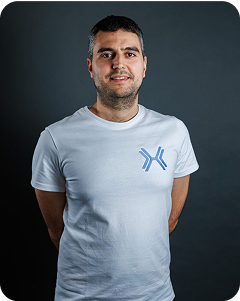
3x CEO and co-founder of xHeal. After a 4-year personal health crisis, he built xHeal to help people understand their health data before symptoms appear. xHeal AI validated against 5,000+ patients.
View full bio →Your health data tells a story. xHeal connects the chapters.
Connect your wearables, lab results, and medical records into one intelligent platform. Free to download.

 HIPAA
HIPAA GDPR
GDPRKeep reading
I Felt Perfectly Healthy. My Data Said Otherwise.
How xHeal's pattern detection caught early insulin resistance before symptoms appeared, and the simple 12-week routine that reversed it.
 Trifon Getsov·Nov 02, 2025
The Lab Tests My Doctor Never Ordered (And Why They Changed Everything)
How xHeal analyzed my symptoms and lifestyle data to recommend specific tests beyond standard panels, revealing a health story my routine bloodwork completely missed.
Trifon Getsov·Nov 02, 2025
Signs a Flare-Up Is Coming: What Your Body Shows 48 Hours Before
Your body sends warning signals days before symptoms hit. Here's what the research says about early detection, and how connecting your data can help you prepare.
Trifon Getsov·Feb 20, 2026