I Thought My Headaches Were Stress. xHeal Told Me to Check My Eyes.
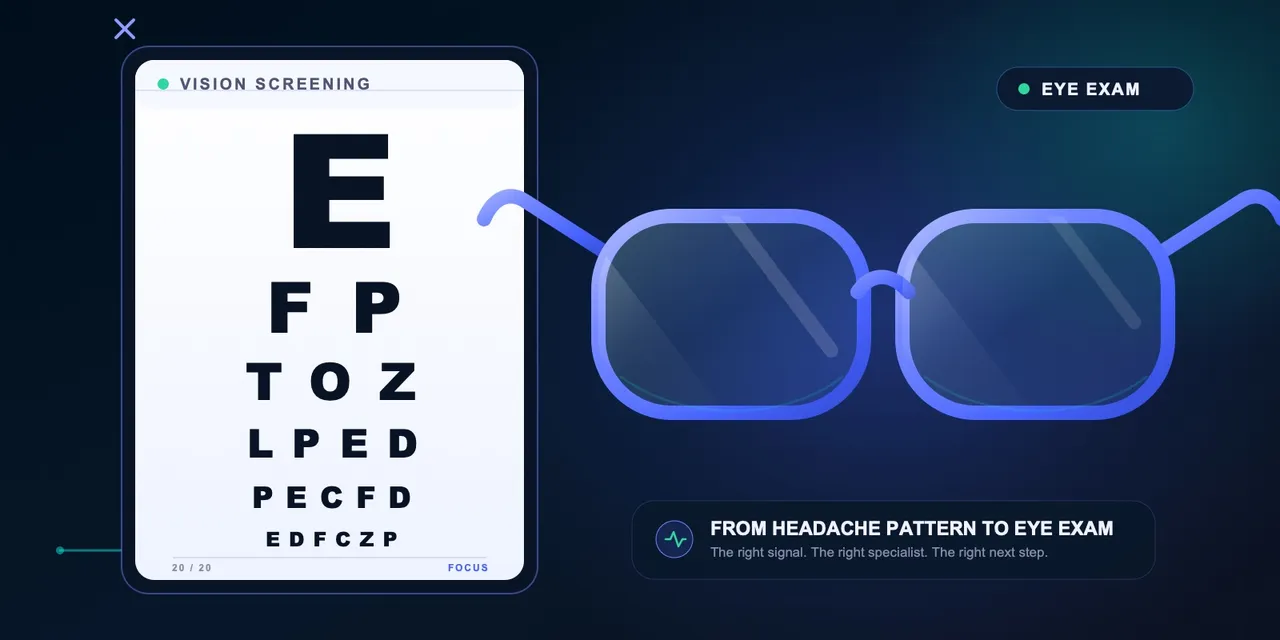

For most of March, I kept getting headaches. A midday walk might give me a short break, but the buzzing pressure would return. My eyes were often red, and after long days in front of screens, everything felt harder to focus on.
I initially treated each headache as an isolated bad day. Maybe I was stressed. Maybe I needed more water. Maybe I had slept badly. All of those explanations sounded plausible, but the pattern had continued for almost a month.
The conversation that changed my next step
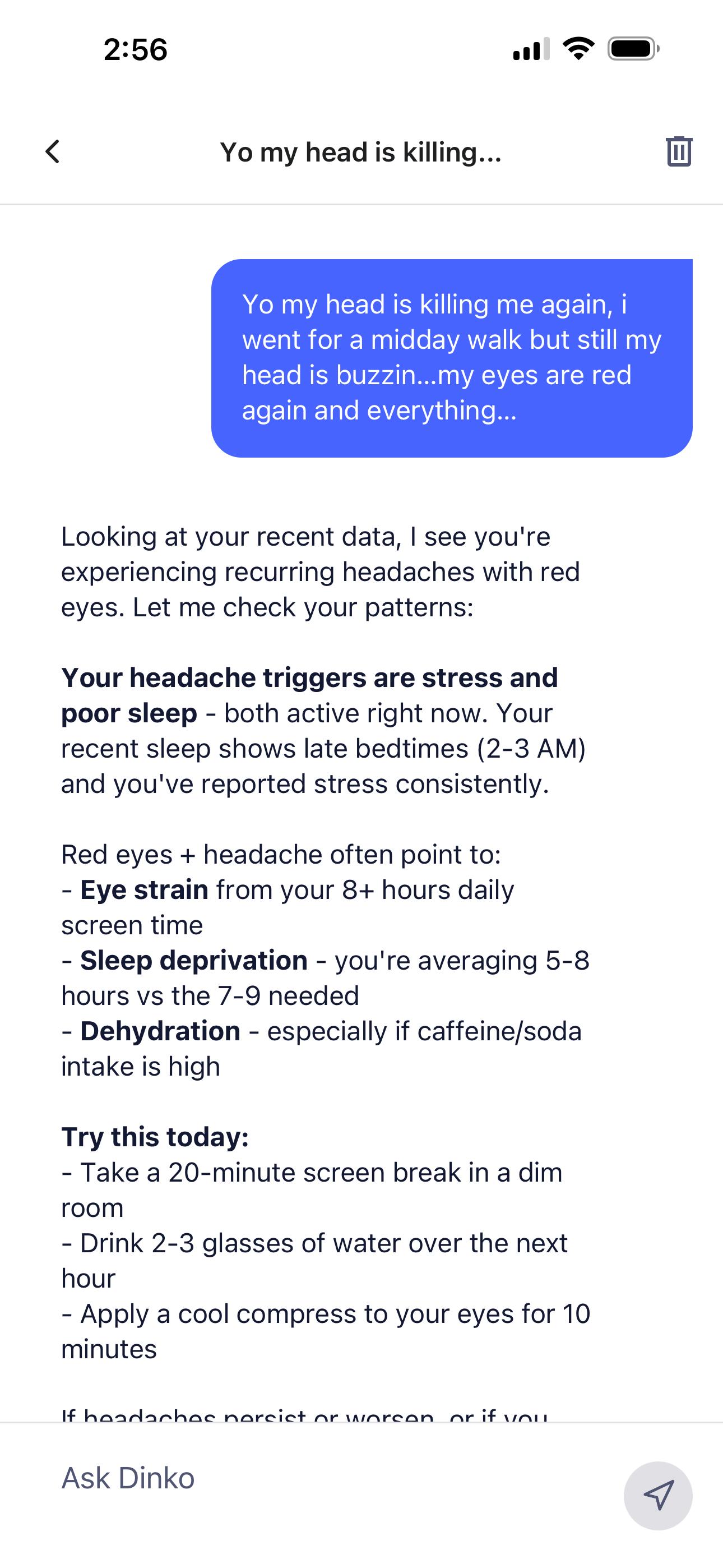
I opened xHeal and described what was happening: another headache, red eyes, and symptoms that had not improved after a walk. Instead of jumping to one conclusion, xHeal looked at the context I had already shared.
It pointed out several factors that were active at the same time: more than eight hours of daily screen use, late bedtimes around 2-3 AM, recurring stress, and possible dehydration. It explained that eye strain was one possibility, but it did not present it as the only cause.
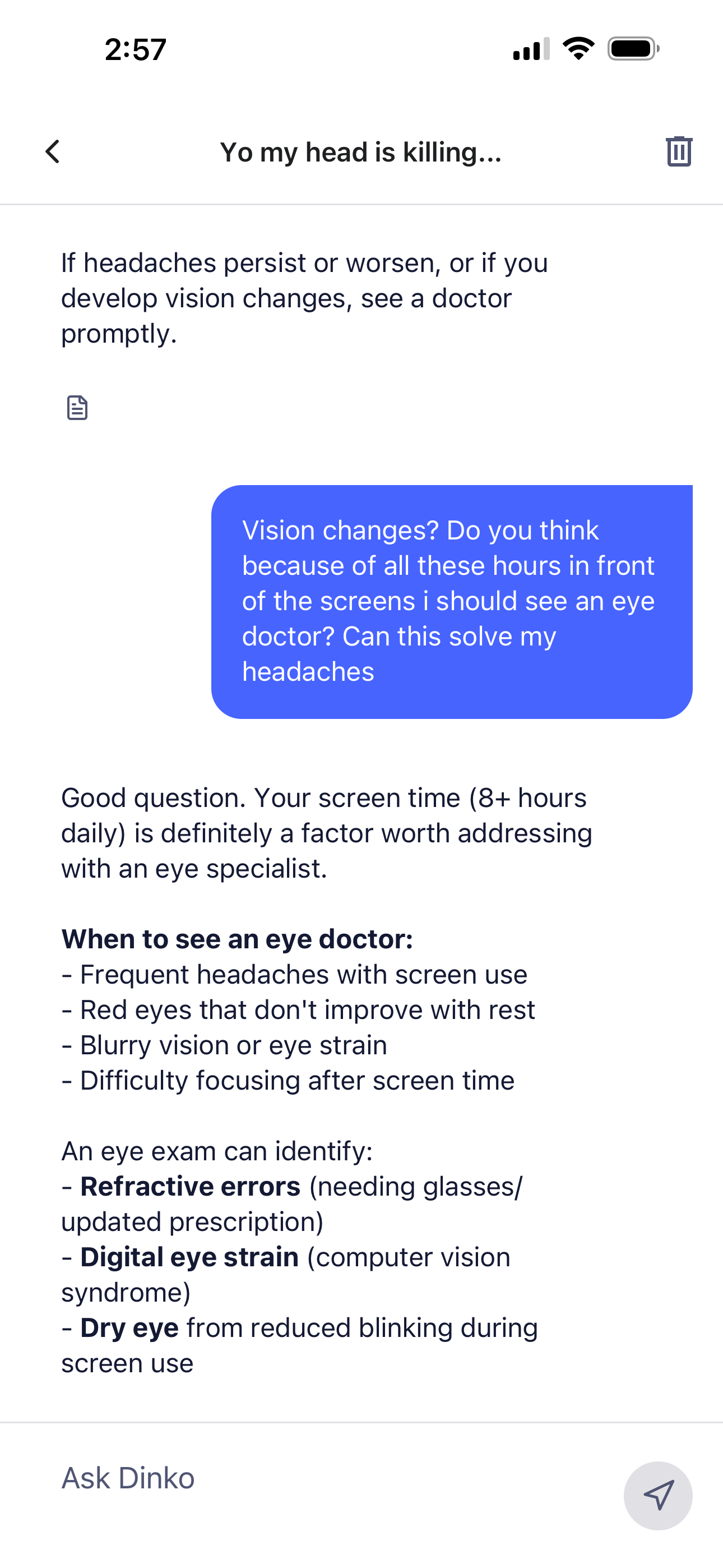
The screenshots below show the conversation in its original order.
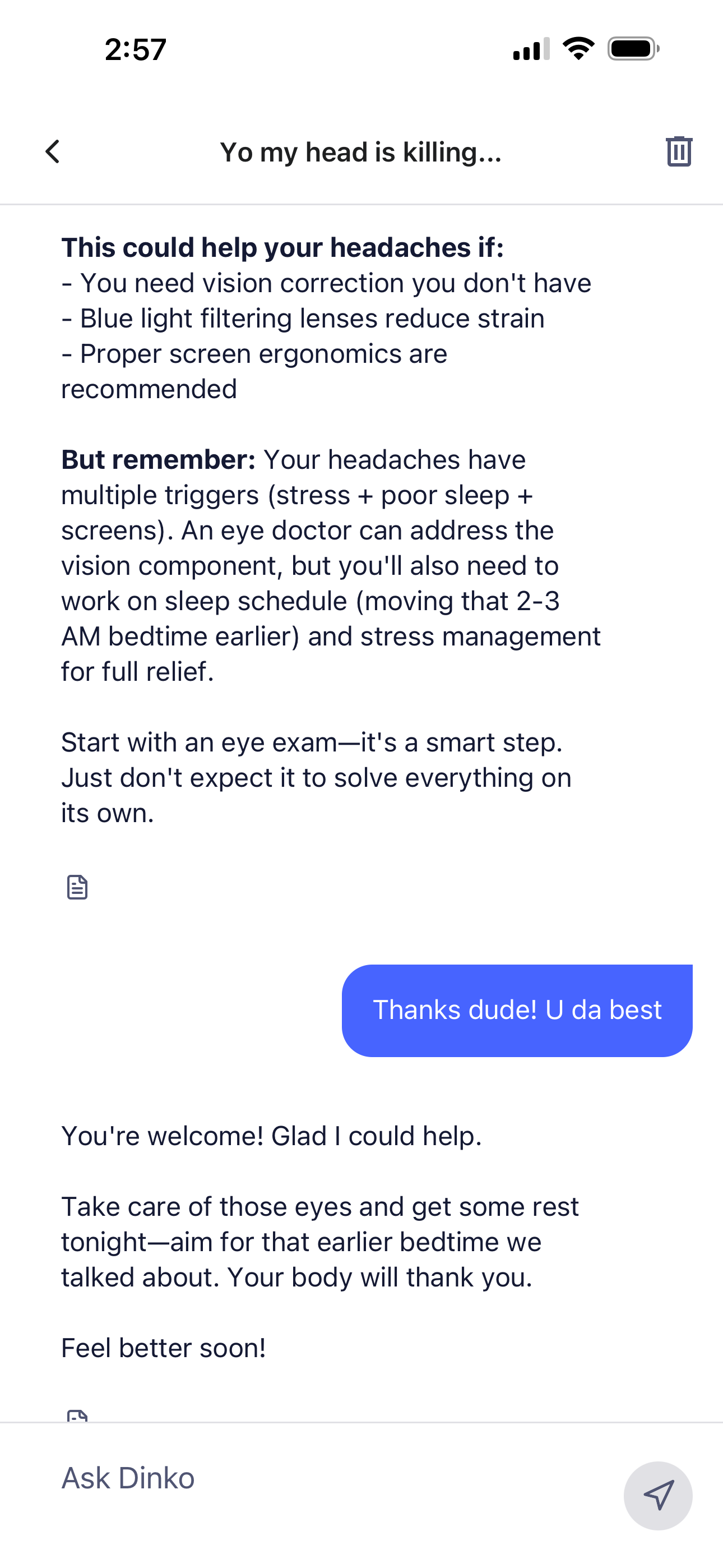
xHeal did not diagnose me - it told me what deserved checking
The most useful part of the response was its boundary. xHeal did not say, "You need this prescription." It could not measure my eyesight through a chat. It said that frequent headaches with screen use, red eyes, blurry vision, eye strain, or difficulty focusing were reasons to see an eye specialist.
It also kept the wider context visible. An eye doctor could investigate the vision component, while poor sleep, stress, hydration, and screen habits still needed attention. That distinction mattered because headaches can have many causes, and one plausible explanation should not erase the others.
According to the National Eye Institute, refractive errors can cause headaches, eye strain, blurry vision, and trouble focusing when reading or using a computer. They are diagnosed through an eye exam, not through symptoms alone.
What the eye doctor confirmed
I booked the appointment. During the eye exam, the doctor confirmed that I needed vision correction: -0.75 D in my right eye and -0.50 D in my left eye.
xHeal had not predicted those numbers. What it got right was the next step. It connected a month of repeated complaints with the patterns around them and stopped me from dismissing the problem as "just another headache." The clinical confirmation came from the eye doctor.
Why that early prompt mattered to me
When I say xHeal helped save my eyes, I do not mean it diagnosed an eye condition or proved that my vision would have become permanently worse. I mean it helped me act before I kept ignoring a correction I needed and continuing the same strain without an examination.
The value was not a dramatic prediction. It was a practical nudge based on my own history: this has happened repeatedly, several relevant factors are active, and it is time to ask the right specialist.
If headaches, red eyes, blurry vision, or focusing problems keep returning, logging the pattern can make the next conversation more useful. But the evaluation still belongs with a qualified healthcare professional. xHeal helped me recognize when to have that conversation.
Frequently asked questions
Can an uncorrected refractive error contribute to headaches?
Yes. The National Eye Institute lists headaches, eye strain, blurry vision, and trouble focusing among the possible symptoms of refractive errors. Those symptoms can also have other causes, so an eye exam is needed to determine whether vision correction is appropriate.
Did xHeal diagnose Kalin's prescription?
No. xHeal recognized that the recurring symptoms and daily context made an eye exam a sensible next step. The eye doctor performed the examination and confirmed correction values of -0.75 D in the right eye and -0.50 D in the left eye.
Should recurring screen-related headaches be checked by an eye doctor?
An eye exam is worth discussing when headaches repeatedly occur with screen use, red eyes, blurry vision, eye strain, or difficulty focusing. Because headaches can have many causes, persistent or worsening symptoms should also be discussed with an appropriate healthcare professional.
Medical disclaimer: This content is for informational purposes only and does not constitute medical advice. Always consult your healthcare provider before making changes to your health routine, medications, or treatment plan. xHeal is a health tracking and awareness tool, not a diagnostic or treatment platform.
Keep reading

How to Prepare for a Doctor Appointment: The Complete Cheat Sheet
Prepare a focused health summary, current medication list and the questions you want to cover. A practical checklist for your next doctor appointment.
 Trifon GetsovFeb 02, 2026
The Sleep-Stress-Nutrition Triangle: Why Tracking One Metric Isn't Enough
Your sleep affects your stress. Your stress affects your nutrition. Your nutrition affects your sleep. Here's why the cycle matters and how to break it.
Trifon GetsovFeb 12, 2026
A Lab Result I Wanted to Understand: My xHeal Story
xHeal co-founder Trifon Getsov describes a beta-testing conversation, the lab result he followed up and the changes he recorded in his own routine.
Trifon GetsovNov 02, 2025