Six Months Building xHeal v2: What Changed and How We Tested It

On July 20, xHeal v2 is scheduled to launch on iOS in the European Union and the United States. The date matters, but the work between the first version and this release matters more.
This is a retrospective account of what we built from January through July 2026 and how we checked it. We are publishing it now rather than presenting past development milestones as old news articles.
January: putting the daily experience into our own hands
The team began a 12-week internal program with xHeal while refining guided routine setup, daily tasks, completion feedback, and rewards. This was internal dogfooding, not an external user or clinical study. Its purpose was to expose friction through repeated daily use.
In parallel, the engineering team established a baseline of 576 automated Python tests across five backend packages. That baseline gave later workflow changes a repeatable safety net.
February: coordinating onboarding behind the scenes
Onboarding moved toward one completion journey for profile details, goals, Health access, preferences, account resources, and initial plan setup. Automated workflow tests exercised the coordinated process, and a follow-up race-condition fix improved reliability when setup operations competed.
March: connecting health data with useful context
The Apple Health pipeline gained historical synchronization, aggregation, charts, and live computed wellness indicators. Documents, report processing, flare-up context, and chat actions also became more closely connected.
We expanded deterministic and integration testing and performed an internal physical-device technical check. These checks focused on whether the software behaved as designed; they did not establish medical accuracy or clinical effectiveness.
April: dedicated nutrition, workout, and mindfulness experiences
Nutrition grew to include food and macro logging, plans, recipes, and meal-photo analysis. Workouts added readiness-aware recommendations, session tracking, saved plans, history, and progress. Mindfulness added breathing patterns, mood check-ins, readiness, ambient audio, and activity history.
Each area was checked through combinations of API, domain, workflow, and mobile-component tests. Features that were not complete, such as barcode food lookup or a full meditation library, were not treated as launch capabilities.
Interest in Doctor Ready and Health Gaps also led to structured product pilots with US physicians and participating xHeal users. Together, we began evaluating how xHeal could help people organize their health context before appointments and identify missing information for more prepared care conversations.
May: assembling the daily experience
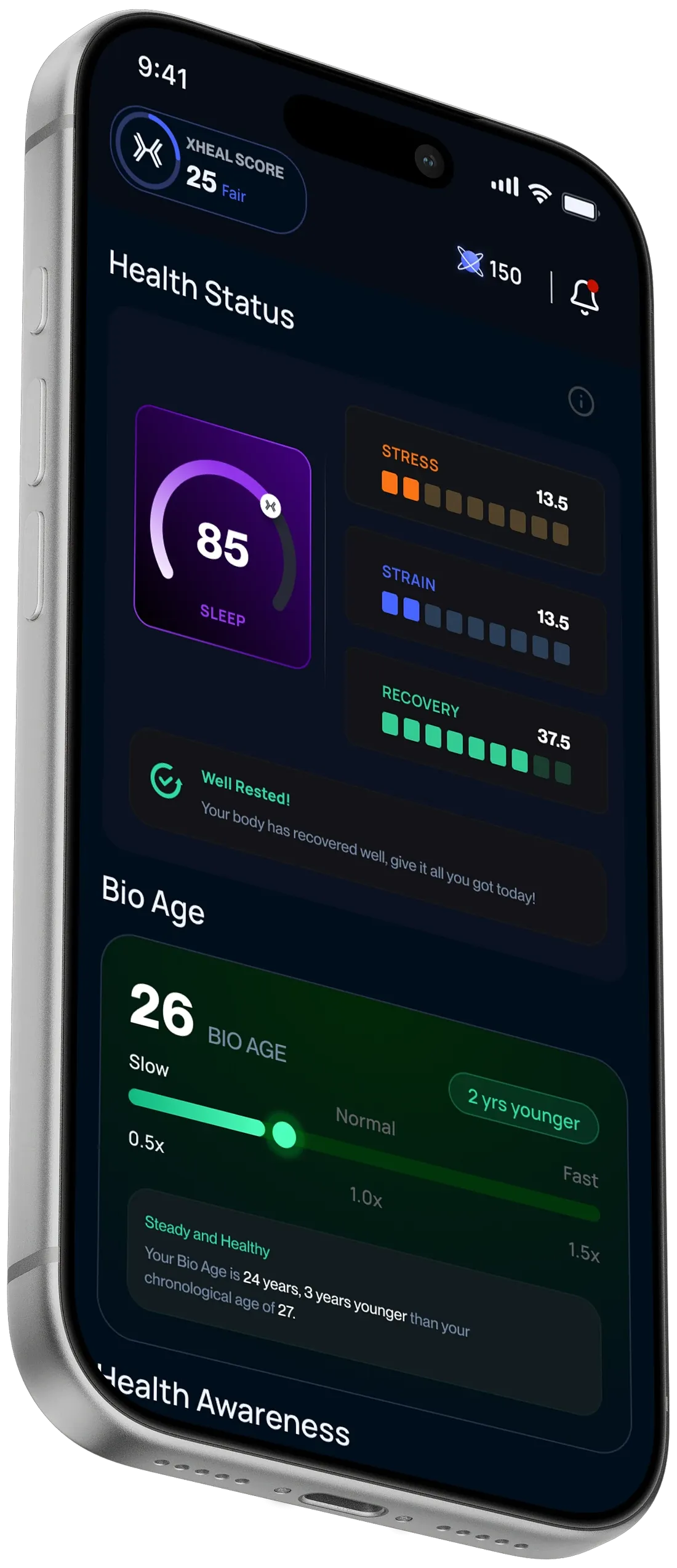
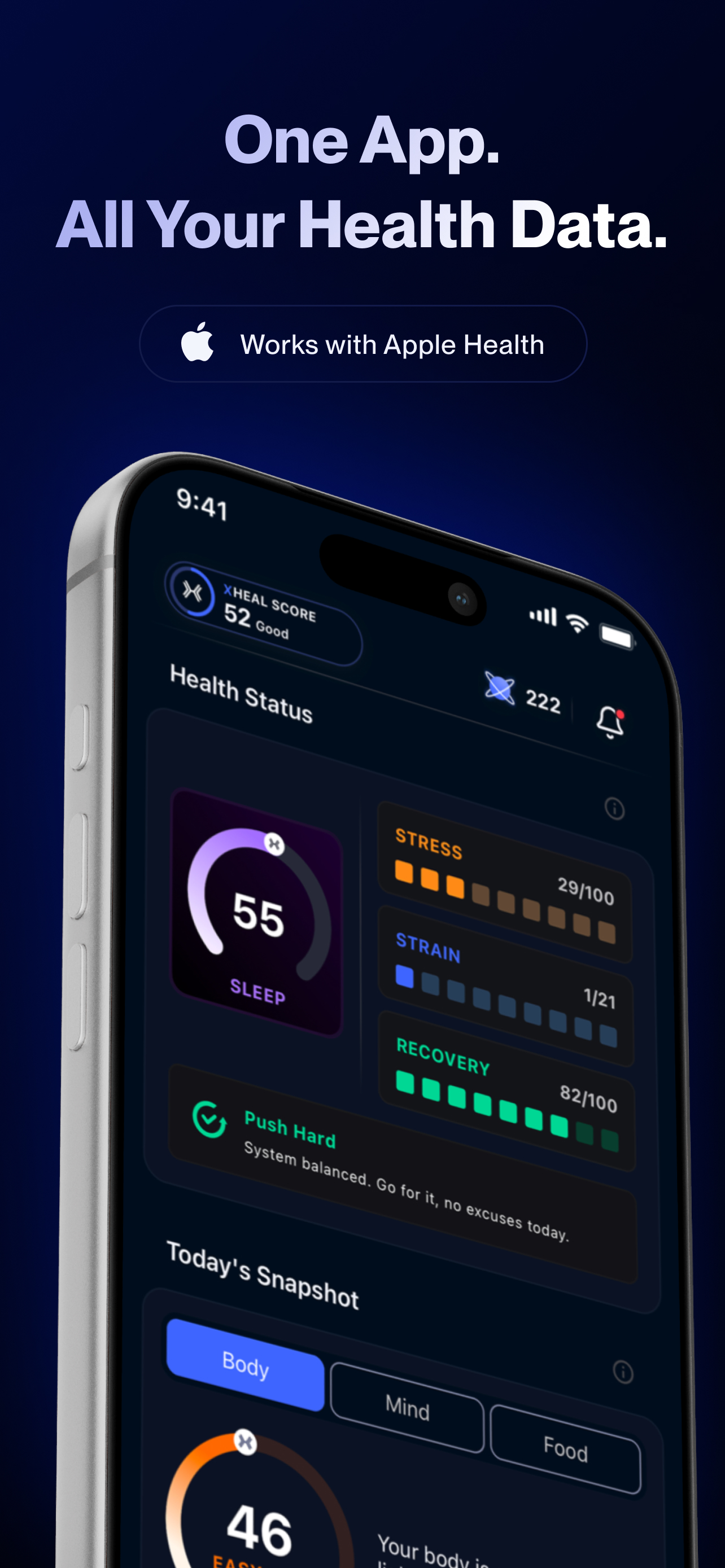
Today's Snapshot brought Body, Mind, and Food into one view. A deterministic routine builder made daily task generation reproducible from factors such as pace, selected conditions, enabled areas, and nutrition-plan data.
The routine workflow was exercised through a 37-case end-to-end workflow suite alongside focused domain tests. Goals were stored during this phase, but were not presented as a factor that independently changed task selection.
June: unifying the core journeys
Root onboarding became resumable and gained feature explanations. Timeline moved to a unified experience for reports, documents, Health Stories, and trackers, with search, filters, sorting, uploads, and visible processing states.
We also added privacy-filtered product analytics and verified canonical events in GA4 Realtime. At the end of June, a broad continuous-integration run covered backend packages, mobile unit tests, and Maestro flow syntax. Syntax validation confirms that automation definitions are structurally valid; it is not the same as proving every mobile journey passed on a simulator.
July: preparing the release
After final interface and feature refinements, version 2.0.0 was tagged on July 14. Backend release containers were built successfully, followed by a local iOS build and TestFlight upload step.
What we mean by validation
For this release, validation means internal daily use, automated software tests, workflow checks, physical-device technical checks, privacy-filtered analytics verification, and release-build preparation.
It does not mean that xHeal v2 has completed a clinical trial, proven a medical outcome, or replaced evaluation by a qualified healthcare professional. xHeal is designed for informational and wellness use, and we will keep that boundary visible as the product evolves.
Medical disclaimer: This content is for informational purposes only and does not constitute medical advice. Always consult your healthcare provider before making changes to your health routine, medications, or treatment plan. xHeal is a health tracking and awareness tool, not a diagnostic or treatment platform.
Keep reading

Four Everyday Journeys at the Center of xHeal v2
A closer look at how setup, Today's Snapshot, routines, Timeline, chat, and reports work together in xHeal v2.
xHeal TeamJul 19, 2026
xHeal v2 Launches on iOS in the EU and US
The new xHeal experience brings your daily Snapshot, routines, Timeline, chat, reports, nutrition, workouts, and mindfulness into one iOS app.
xHeal TeamJul 20, 2026
Why We Added Workouts, Nutrition, and Mindfulness to xHeal
Why we chose to bring movement, food, and mental wellbeing into one app, turning connected daily context into practical next steps for body and mind.
xHeal TeamMay 1, 2026