The Sleep-Stress-Nutrition Triangle: Why Tracking One Metric Isn't Enough
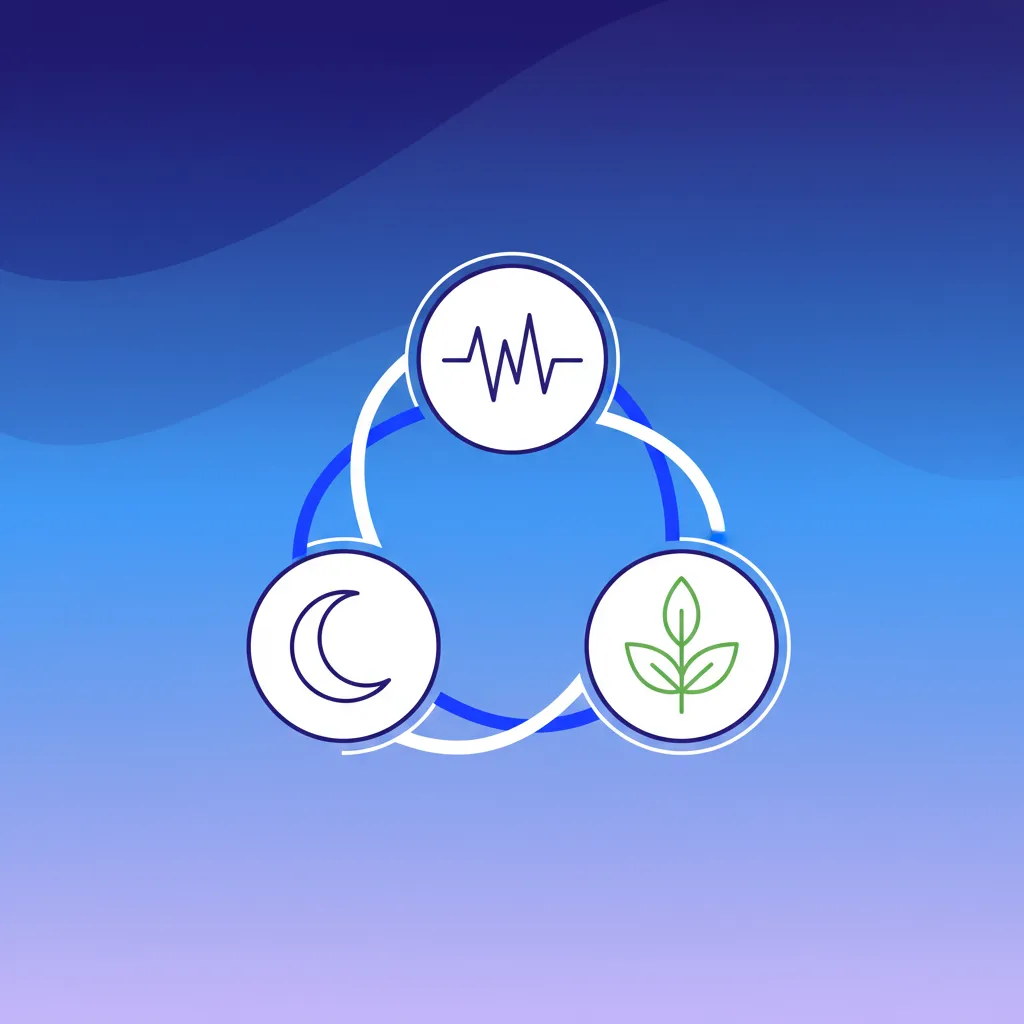

You slept poorly, so you reached for extra coffee and a sugary breakfast. The sugar spike crashed your energy by noon, so you skipped your workout. The skipped workout left you wired at bedtime. You slept poorly again.
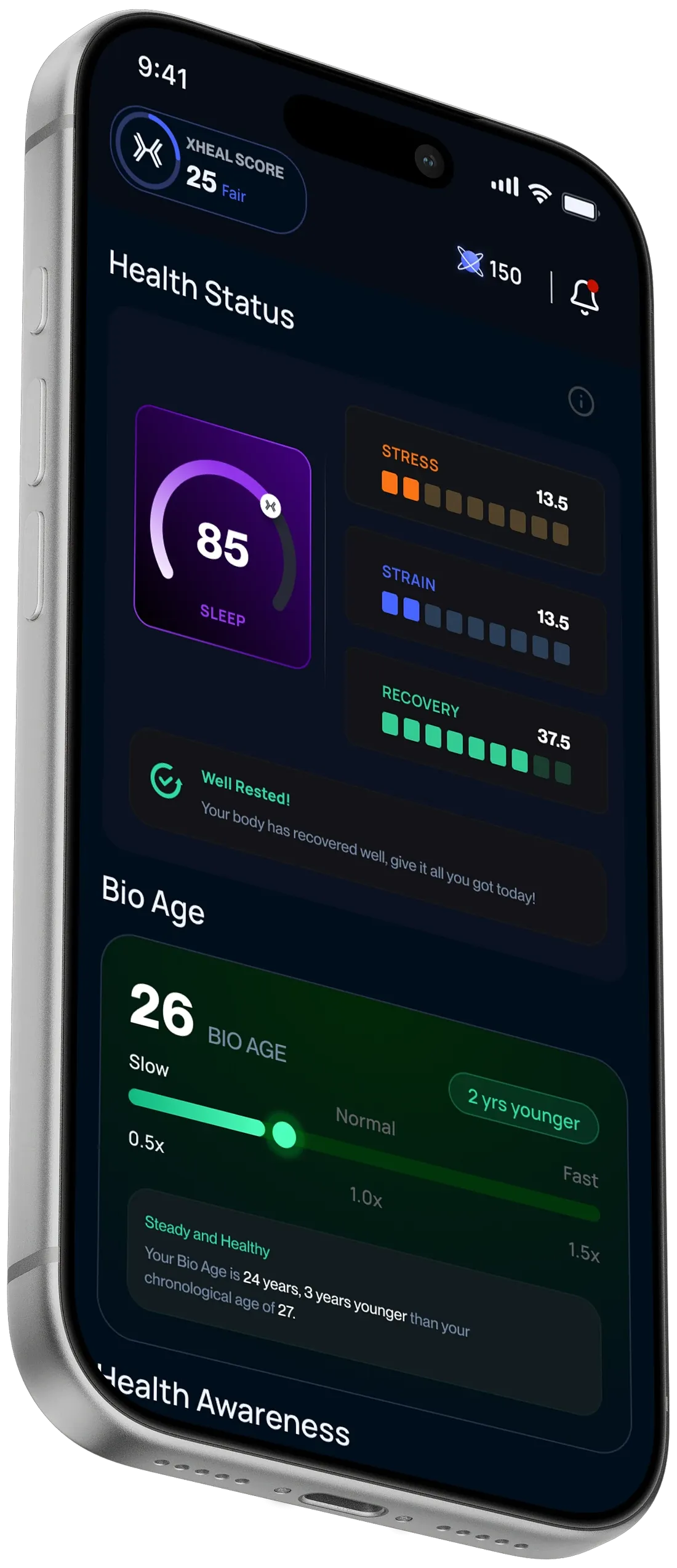
Sound familiar? This isn't a series of unrelated bad choices. It's a single cycle with three interconnected nodes, and tracking any one of them in isolation gives you an incomplete picture.
How poor sleep drives chronic stress: the biological link
Poor sleep can disrupt the body's stress response, but the effect on cortisol is not a single predictable percentage. A systematic review and meta-analysis found no significant overall cortisol difference after acute sleep deprivation, although serum-based studies showed an increase. That variability is why your own trends matter more than a universal number.
Meanwhile, elevated stress makes sleep harder to achieve. Cortisol suppresses melatonin production, delays sleep onset, and reduces time in deep sleep stages. It's a feedback loop: poor sleep creates stress, which creates poor sleep.
How stress affects what you eat: the cortisol-craving cycle
Cortisol doesn't just affect your mood. It directly increases cravings for high-calorie, high-sugar foods. This isn't weakness. It's biochemistry. Your brain, under stress, seeks the fastest available energy source.
The resulting blood sugar instability creates more cortisol, more cravings, and more energy crashes. Stressed people don't just eat worse because they're distracted. Their hormones are actively driving them toward choices that perpetuate the cycle.
How nutrition affects sleep quality
Food, alcohol, meal timing and sleep can interact, but a particular meal does not predict a fixed change in sleep stages. Keep relevant changes in your notes and discuss persistent sleep concerns with a qualified professional.
Conversely, certain nutrition patterns actively improve sleep: adequate magnesium intake, tryptophan-rich foods at dinner, and stable blood sugar throughout the day all support better sleep onset and quality.
Why tracking sleep alone does not break the cycle
If you only track sleep, you'll see the problem but miss the cause. If you only track nutrition, you'll address symptoms without understanding the stress driving your choices. If you only track stress, you'll know you're stressed but not why your coping mechanisms aren't working.
The cycle only becomes visible when you see all three together: last night's sleep quality, today's stress levels, today's nutrition choices, and tonight's sleep quality. Then the chain of cause and effect reveals itself.
This is why apps that track only sleep (or only food) keep failing you. Fitbit shows you sleep data. MyFitnessPal shows you calories. Neither shows you how Tuesday's work crisis caused Wednesday's 3 AM wake-up and Thursday's poor nutrition choices. Integrated data does.
How to break the cycle: 5 entry points
When all three metrics are degraded, start with sleep. It has the highest downstream leverage.
Entry point 1: Fix sleep timing before duration
Going to bed and waking at the same time (±30 minutes) is more impactful than sleeping "more." Consistent timing regulates the cortisol awakening response (CAR), the morning cortisol spike that sets your stress tone for the day. Irregular sleep timing suppresses this rhythm even when total sleep hours are adequate.
Entry point 2: Eliminate late meals
If meal timing is a question you want to explore, record the timing alongside how you slept. A repeated association may be worth discussing, but the log alone cannot establish a cause or an ideal schedule for you.
Entry point 3: Blood sugar stabilization
High glycemic carbohydrates in the evening cause glucose spikes followed by overnight drops. The drops trigger cortisol release, which fragments sleep. A small protein-fat snack (not carb) before bed buffers this effect if you tend to wake between 2–4 AM.
Entry point 4: Stress periodization (not just stress reduction)
You can't eliminate stress, but you can create recovery windows. 20 minutes of non-stimulating activity (a walk without your phone, breathing exercises) after high-stress periods breaks the cortisol feedback loop. You don't need less stress. You need adequate recovery between stress events.
Entry point 5: What your data will show when it's working
Review how you feel alongside the dates of any routine changes. There is no guaranteed percentage improvement or time to a change in HRV or sleep estimates.
Frequently Asked Questions
Does poor sleep cause stress, or does stress cause poor sleep?
Both, and that's the problem. Sleep and stress influence one another, while cortisol findings after sleep loss vary across studies and measurement methods. This is a bidirectional feedback loop, not a simple fixed-percentage response. Breaking it requires addressing both sides.
How does nutrition affect sleep quality?
Food, alcohol and meal timing can be relevant to a sleep history, but effects vary. A diary can help you remember changes and discuss them with a professional; it does not determine the mechanism or predict a particular change in sleep stages.
What is the sleep-cortisol connection?
Cortisol follows a natural daily rhythm: high in the morning (cortisol awakening response), declining through the day, lowest at night. Poor sleep disrupts this rhythm, causing morning cortisol to be blunted (making you groggy) and evening cortisol to remain elevated (making sleep harder to initiate). This disrupted rhythm amplifies stress reactivity throughout the day.
What's the quickest way to improve sleep, stress, and nutrition at once?
Research consistently points to consistent sleep timing as the highest-leverage intervention. It regulates cortisol rhythm, which reduces stress reactivity, which improves food choices the next day. Start there before optimizing nutrition or adding stress management practices.
Medical disclaimer: This content is for informational purposes only and does not constitute medical advice. Always consult your healthcare provider before making changes to your health routine, medications, or treatment plan. xHeal is a health tracking and awareness tool, not a diagnostic or treatment platform.
CEO and co-founder of xHeal. His four-year search for answers about his own health led him to build a clearer way to connect health records, wearable trends and everyday observations. He writes from his experience as a founder and xHeal user.
View full bio →Keep reading

What Does HRV Mean? Heart Rate Variability Explained for Real People
Learn what heart rate variability measures, why your own baseline matters and where wearable trends fall short.
Trifon GetsovFeb 10, 2026
Apple Watch Health Data: What It Shows and What It Misses
Wearable estimates can add useful context. Keep their limits clear alongside laboratory reports, medications, daily notes and professional assessment.
Trifon GetsovFeb 08, 2026
xHeal v2 Launches on iOS in the EU and US
The new xHeal experience brings your daily Snapshot, routines, Timeline, chat, reports, nutrition, workouts, and mindfulness into one iOS app.
 xHeal TeamJul 20, 2026