What Does HRV Mean? Heart Rate Variability Explained for Real People


Heart rate variability (HRV) describes variation in the time between heartbeats. Wearables may show it in milliseconds, but the number needs context: the measurement method, recording conditions and your own history. HRV alone cannot tell you what caused a change or reliably predict tomorrow's symptoms.
This guide explains how to read an HRV trend and prepare useful questions about it.
What heart rate variability actually measures
Heart rate counts beats per minute; HRV describes how the intervals between beats vary. Those intervals change with breathing and autonomic nervous system activity. Normal variation is not the same thing as a heart rhythm disorder.
Age, activity, stress, medications and health conditions can affect HRV. A higher wearable value is not automatically proof of better health, and a lower value does not identify a disease. Cleveland Clinic's HRV overview explains why interpretation is individual.
Why your HRV baseline matters more than the absolute number
A value such as 42 ms cannot be graded without knowing the metric, recording conditions and the person. Compare measurements collected in similar conditions using the same device and method.
A percentage change does not have the same meaning for every person, device or measurement method. Review the conditions and available history rather than using one universal cutoff.
What is a good HRV score?
There is no universal good HRV score. HRV tends to decrease with age, but age alone cannot classify an individual's reading as healthy or unhealthy. A population average is not a diagnostic threshold.
Check which HRV metric your app displays. SDNN and RMSSD are different calculations, and recording duration also matters. Avoid comparing numbers across devices or apps without checking their methods.
How to read a change in your daily HRV
Before interpreting a higher or lower reading, check:
- Was it collected at a comparable time and under similar conditions?
- Did the device record enough usable information?
- Is the change repeated, or is it one unusual measurement?
Then review the wider context:
- How you feel and any symptoms you have noticed
- Recent activity, rest and changes in routine
- Your care team's advice and any relevant health conditions
Why might HRV change?
A lower reading has several possible explanations. Keep relevant context with the measurement rather than treating this list as a diagnosis:
- Alcohol: Note intake when reviewing changes in sleep and wearable measurements
- Sleep: Record changes in sleep timing and how rested you feel
- Training: Note recent exercise and changes in intensity
- Illness or symptoms: Record what you notice; HRV does not provide a reliable countdown to illness
- Emotional stress: Keep dated notes about stressful periods
- Hydration and routine: Keep relevant changes with your record, without assuming they explain a measurement
- Measurement conditions: Check device fit, movement and recording time
- Medications and health conditions: Discuss relevant changes with your care team; do not change medication to alter an HRV score
How to improve your HRV
Cleveland Clinic describes physical activity, general health and stress management as factors that can help HRV. Focus on sustainable habits suited to your circumstances rather than chasing a target number:
- Keep a sustainable sleep and activity routine.
- Choose exercise appropriate to your health and current abilities.
- Find manageable ways to address stress, with professional support when needed.
- If you explore breathing or biofeedback, distinguish an immediate measurement change from a lasting health benefit.
The connection most people miss
Looking at HRV beside other information can help you frame a question. It does not establish causation. For example:
- Readings differ on Mondays? Compare recording conditions and weekend notes before drawing a conclusion.
- A reading changed after a meal? Timing alone cannot identify a food sensitivity.
- HRV changes appear around recorded episodes? Note the timing and discuss other possible explanations with your care team.
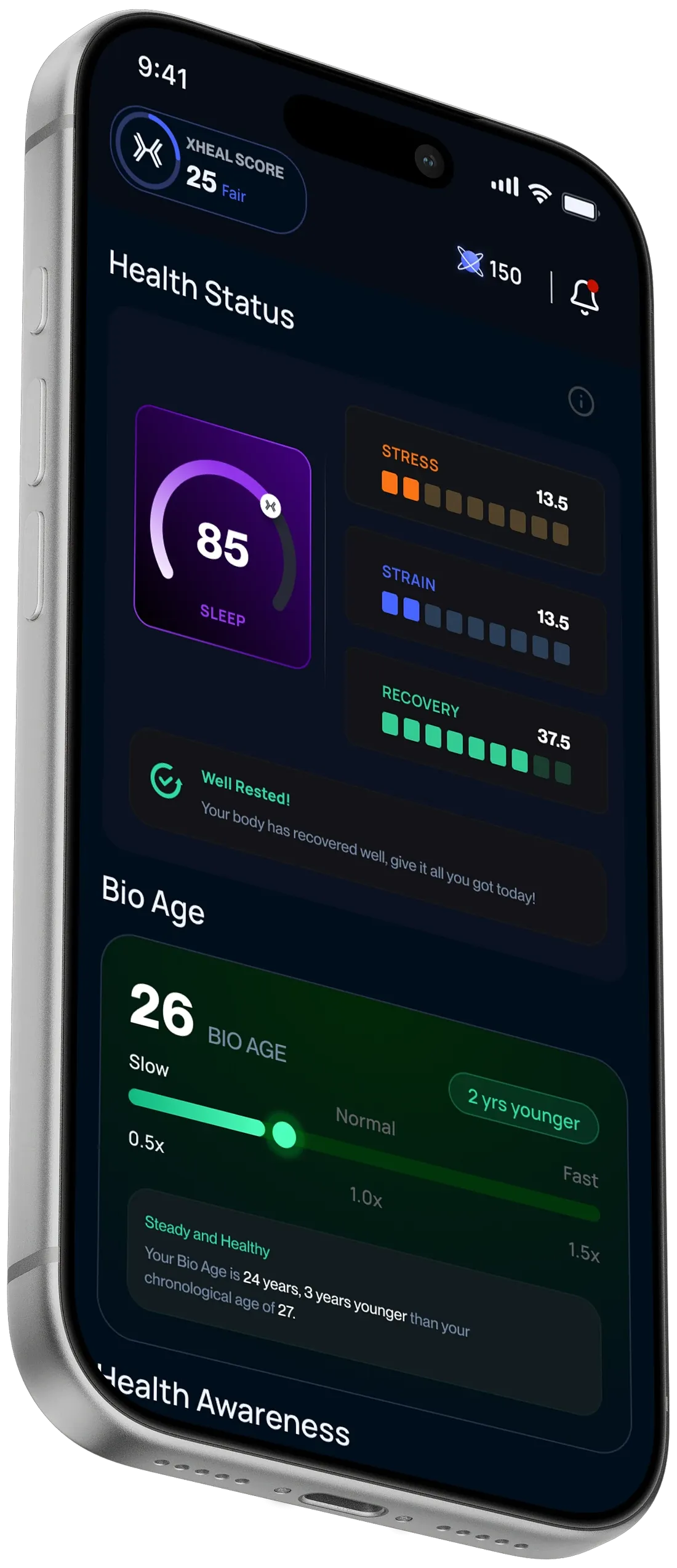
In xHeal, keep available wearable trends beside dated notes and records. Use that context to prepare questions, and check the original sources. Read more about organizing your health timeline.
Practical HRV habits
Review trends collected under comparable conditions and note what else changed. There is no universal three-day rule for interpreting a dip. An HRV score is not medical clearance for exercise or a reason to dismiss symptoms.
If a change concerns you, bring the dates, device details and symptoms to a qualified professional. You can use an appointment summary to organize that conversation.
Frequently Asked Questions
What is a good HRV score?
There is no universal good HRV score. Interpretation depends on your history, age, health, measurement method and recording conditions. Compare like-for-like trends rather than grading one value against an unsourced age table.
Why is my HRV suddenly low?
A lower reading can have several explanations, including changes in activity, stress, health or measurement conditions. Check the recording and wider context. HRV alone cannot identify a cause or predict when symptoms will appear.
Does Apple Watch measure HRV accurately?
Accuracy depends on the device, recording conditions and measurement method. Check the metric and recording window in your app. Consumer HRV estimates are not equivalent to a clinical assessment, and readings from different methods are not directly interchangeable.
Can you increase HRV?
Physical activity, general health and stress management can influence HRV. Responses vary, and no routine guarantees a particular increase or timeline. Focus on habits appropriate to your circumstances rather than a target score.
Source and editorial scope
Cleveland Clinic: Heart Rate Variability (HRV), accessed 9 September 2026. This editorial update corrects measurement and interpretation claims; it is not a medical review or validation of xHeal.
Medical disclaimer: This content is for informational purposes only and does not constitute medical advice. Always consult your healthcare provider before making changes to your health routine, medications, or treatment plan. xHeal is a health tracking and awareness tool, not a diagnostic or treatment platform.

CEO and co-founder of xHeal. His four-year search for answers about his own health led him to build a clearer way to connect health records, wearable trends and everyday observations. He writes from his experience as a founder and xHeal user.
View full bio →Keep reading

How to Know If You're Overtraining: What My Data Showed Before My Body Did
My performance was declining despite training harder. When I finally connected my recovery data to my training log, the answer was obvious, and I'd been ignoring it for months.
Trifon GetsovFeb 14, 2026
Flare-Up Warning Signs: Wearable Research and Its Limits
Research has found changes around some rheumatoid arthritis flares. Learn why these findings do not establish a prediction window and how to keep useful symptom context.
Trifon GetsovFeb 20, 2026Understanding Your Health Data: A Complete Guide to Wearables, Labs, and What It All Means
Your Apple Watch, lab results, and symptom logs are all telling a story. Here is how to read it, connect the pieces, and turn raw numbers into decisions that actually improve your health.
Trifon GetsovMar 26, 2026