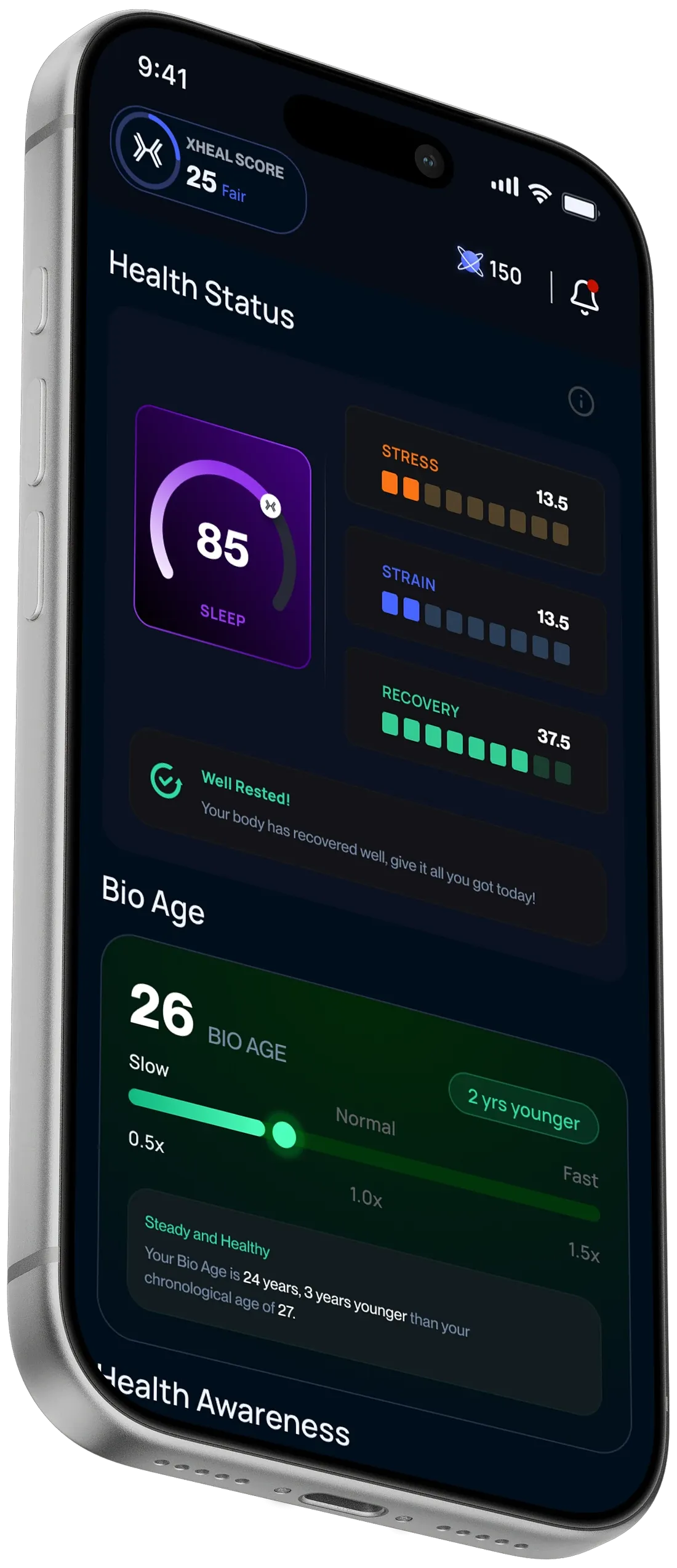
Flare-Up Warning Signs: Wearable Research and Its Limits


If you live with a chronic condition, you know the feeling. One day you're fine. The next, you're in the middle of a flare-up wondering what went wrong. But physiological changes can sometimes begin before symptoms become obvious.
What research shows about wearable flare-up signals
A prospective study published in Scientific Reports followed 53 people with rheumatoid arthritis and found that commercially available wearables captured physiological differences around symptomatic and inflammatory flares. The study observed:
- Heart rate and resting heart rate were higher during inflammatory flares than during remission
- Circadian HRV patterns differed between flare and remission periods
- Step counts were lower during symptomatic flares
- Several metrics changed before flare onset, although larger studies are needed before these signals can guide individual clinical decisions
Individually, none of these changes diagnoses a flare. Their value is as a pattern relative to a person's own baseline and alongside symptoms and clinical assessment.
What the research does not establish
Results in one rheumatoid arthritis cohort do not establish a validated xHeal prediction feature or a warning window for other conditions. A group-level association can be difficult to apply to an individual person.
Device estimates, missing measurements and unrelated changes can all affect a trend. A change can be worth recording without being a reliable warning.
How connecting your health data reveals hidden patterns
Bringing dated records together can make them easier to review. Examples of questions to explore include:
- A change in HRV combined with shifts in activity and resting heart rate may be worth comparing with your symptom history
- Did your recorded symptoms coincide with changes in sleep, activity or daily routine?
- Is a suspected pattern repeated, and what other explanations would your care team consider?
What to do with a change you've noticed
Follow the plan you have agreed with your care team. To make the history easier to discuss, you can:
- Record what changed and when
- Note symptoms alongside the device estimate
- Keep relevant source records and medication details available
- Ask your care team when a change should prompt contact
- Prepare questions about repeated patterns or gaps in the history
The practical goal is not to self-diagnose from a wearable. It is to notice changes early enough to follow the plan you have agreed with your care team.
How to start tracking flare-up warning signs today
Start with a manageable symptom log and the information you already have. A date, a short description and relevant changes may be more useful than collecting many measurements without a clear question.
More data does not guarantee an earlier warning. Use xHeal symptom tracking to organize your history and prepare a discussion, rather than to infer that an episode will happen.
Frequently asked questions
Can wearables actually predict flare-ups before symptoms appear?
They may help. A prospective rheumatoid arthritis study found that heart rate, resting heart rate, HRV patterns, and activity differed around flares and that several metrics changed before flare onset. This is promising research, not a validated diagnosis from any single wearable reading.
What metrics should I track to detect an incoming flare-up?
Track trends your device measures consistently, such as resting heart rate, heart rate variability, and activity, then compare them with a dated symptom log. Research has not established universal percentage thresholds that work across conditions or devices.
How far in advance can a flare-up be predicted?
There is no universal warning window. A recent rheumatoid arthritis cohort observed physiological changes in the weeks before some flares, but the timing and usefulness of those changes vary by person, condition, device, and flare definition.
What should I do when my data shows early warning signs?
Compare the change with your symptoms and follow the flare plan agreed with your care team. A wearable trend alone should not be used to change medication or make a diagnosis.
Medical disclaimer: This content is for informational purposes only and does not constitute medical advice. Always consult your healthcare provider before making changes to your health routine, medications, or treatment plan. xHeal is a health tracking and awareness tool, not a diagnostic or treatment platform.

CEO and co-founder of xHeal. His four-year search for answers about his own health led him to build a clearer way to connect health records, wearable trends and everyday observations. He writes from his experience as a founder and xHeal user.
View full bio →Keep reading

Five Things to Record Around a Symptom Flare
Keep sleep, daily stress, medication details and other context with your symptom history. A practical way to prepare questions without assuming a cause.
Trifon GetsovFeb 17, 2026
A Lab Result I Wanted to Understand: My xHeal Story
xHeal co-founder Trifon Getsov describes a beta-testing conversation, the lab result he followed up and the changes he recorded in his own routine.
Trifon GetsovNov 02, 2025Chronic Condition Management: The Complete Data-Driven Guide
Organize symptom notes, wearable trends and source records to support conversations about a chronic condition, with clear limits on what tracking can show.
Trifon GetsovMar 26, 2026