Trifon Getsov · xHeal co-founder
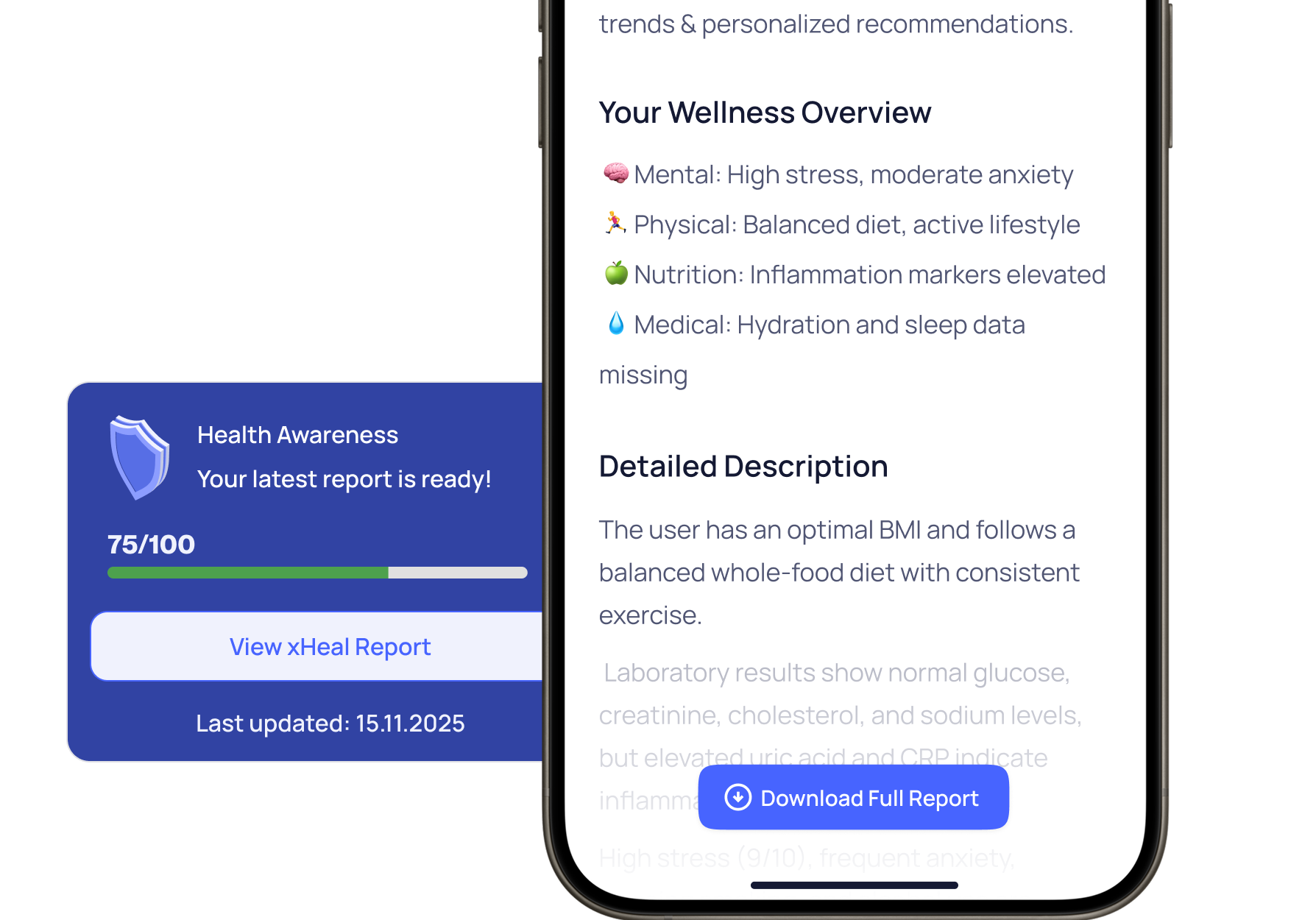
A lab result worth following up
Trifon describes his own health journey, the information he reviewed and the questions it raised.
Read Trifon's account →

Check current features and plan terms in the app.
A fixed plan cannot see last night's sleep, a falling HRV trend, or the stress you carried into the gym. It repeats the schedule even when your body needs a different day.
Recovery apps can tell you that readiness is low. You are still left deciding whether to rest, reduce volume, switch movements, or train as planned.
Flare-ups, recovery from surgery and relevant medication information may sit outside your training log, even when they matter to your workout plan.
xHeal brings together Apple Health signals, recent training, your goals, available equipment, and relevant health constraints.
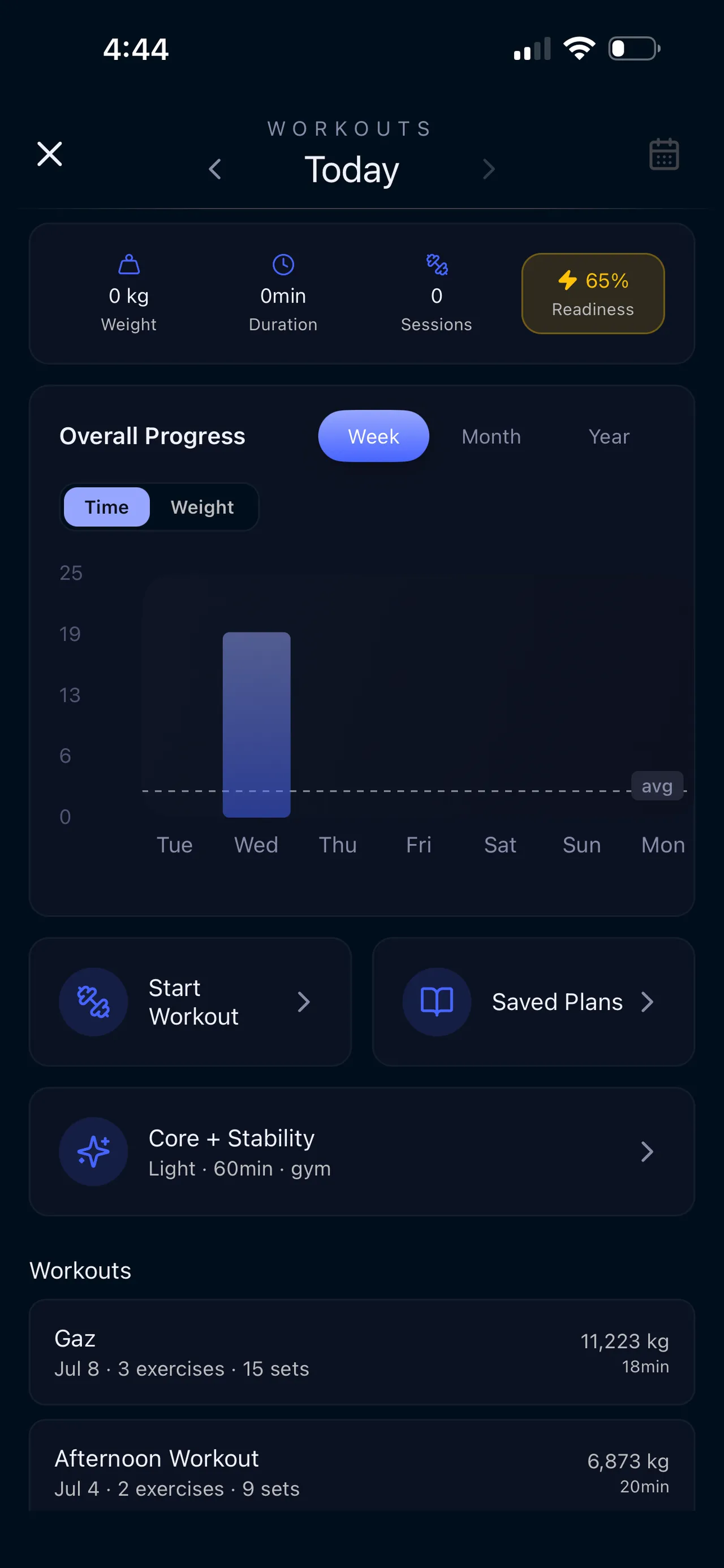
Readiness weighs HRV, resting heart rate, sleep, stress, training load, and constraints so you can see why today may call for more or less intensity.
Start a suggested workout and log sets, reps, weight, rest, distance, notes and photos. Track personal records, training volume and estimated one-rep max over time.
See sleep alongside the other readiness inputs instead of making the decision from one rough night alone.
xHeal includes recent stress in the same readiness view as HRV, resting heart rate, sleep, and training load.
An active flare-up can constrain readiness and steer the recommendation toward a more conservative option.
Recommendations account for available equipment, and exercises can be replaced when a movement or machine does not fit.
Review exercise history, max weight, volume, estimated 1RM, completed sessions, and personal records in one place.
Relevant conditions, surgery recovery, flare-ups, and selected medication contexts can limit unsuitable recommendations. This is guidance, not medical clearance.
WHOOP measures recovery, Fitbod builds strength plans, and Hevy logs lifting. xHeal brings recovery signals, relevant health constraints, a matched workout, and progress tracking together without requiring proprietary hardware.
Use xHeal to review today's readiness, explore workout guidance, log a session and keep your training history beside your wider health context.
Compared using publicly available product information reviewed July 13, 2026, and xHeal's current product implementation.
Features may vary by platform, subscription, and region. Product names are trademarks of their respective owners. xHeal is not affiliated with or endorsed by the compared products.
Trifon Getsov · xHeal co-founder
Trifon describes his own health journey, the information he reviewed and the questions it raised.
Read Trifon's account →Kalin Stoev · xHeal Head of Engineering
Kalin shares how he organized his headache history and followed up with a professional.
Read Kalin's account →xHeal team · Product walkthrough
Explore the steps for adding information, reviewing it and preparing for your next appointment.
See the product walkthrough →First-person accounts and product examples. Individual experiences do not establish clinical effectiveness or predict another person’s results.
Readiness is based on identifiable inputs such as HRV, resting heart rate, sleep, stress, training load, and constraints.
Trends are interpreted against your available history rather than a single universal performance target.
Workout recommendations are informational and never replace medical advice, rehabilitation instructions, or professional coaching.
Workout and health data remain part of your private xHeal profile and are not sold to advertisers.
It combines HRV, resting heart rate, sleep, stress, recent training load, and relevant health constraints. Missing data can reduce how personalized the result is, so use the score as guidance rather than a medical decision.
No proprietary xHeal hardware is required. xHeal can use compatible data available through Apple Health, and workout logging works directly in the app.
Relevant conditions, active flare-ups, surgery recovery, and selected medication contexts can constrain recommendations. Always follow your clinician's instructions when returning to exercise.
You can track exercises, sets, reps, weight, duration, distance, rest, notes, photos, and completion. Available fields depend on the exercise type.
No. xHeal organizes your data and provides informational workout guidance. It does not provide medical clearance, diagnose injuries, or replace a qualified professional.
Download xHeal to bring readiness, workout guidance, and progress into the same health picture.
Check current features and plan terms in the app.