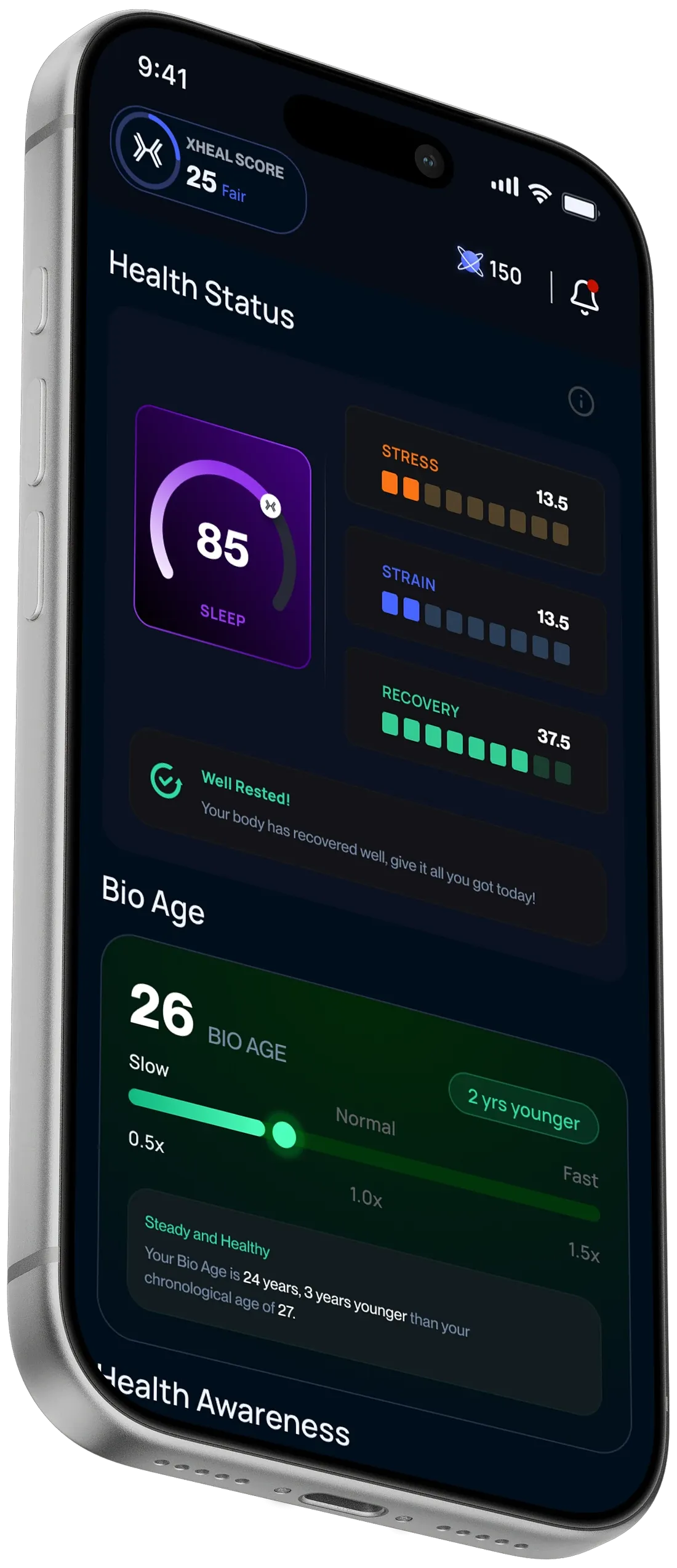
Apple Watch Health Data: What It Shows and What It Misses


Apple Watch can record health and activity information such as heart rate, steps and sleep estimates. Available features depend on the model, software, permissions and region. Check the information for your device rather than assuming every watch records the same set of measurements.
But there are things it fundamentally cannot do.
What Apple Watch health metrics are actually reliable
Apple Watch excels at continuous, passive measurement of physiological signals. Specifically:
- HRV (SDNN): A measure of variation between heartbeats. Availability and recording conditions affect the values you see; it is not a direct measurement of recovery or a prediction of tomorrow.
- VO2 max estimation: Derived from heart rate and activity data. Directionally useful for tracking cardiorespiratory fitness trends over months.
- Irregular rhythm notification: In the Apple Heart Study, subsequent notifications that occurred during simultaneous ECG monitoring had an 84% positive predictive value for atrial fibrillation. The study was not designed to measure sensitivity or specificity.
- Sleep staging: Estimates time in REM, core and deep sleep. A consumer-device estimate is not interchangeable with a clinical sleep study.
- Resting heart rate: A reliable, continuously updated baseline that reflects cardiovascular load, recovery status, and early illness signals.
These are real signals. They matter. But they're measurements without context.
The 5 blind spots no wearable can fill
1. Blood chemistry: the invisible half of your health
Your Apple Watch has no idea what's in your blood. Cholesterol, glucose, hormone levels, vitamin deficiencies, inflammation markers (CRP), thyroid function: none of these are visible to a wrist sensor. Yet blood chemistry explains a significant proportion of why your wearable numbers move the way they do.
2. Medication and supplement interactions
Drug interactions, timing effects, and side effects are invisible to your watch. A beta-blocker suppresses heart rate. A thyroid medication affects HRV. An iron supplement started two weeks ago changes your energy and recovery scores. The watch sees the effect but has no way to know the cause.
3. What you ate, and how your body responded
A wrist sensor cannot directly identify what you ate. Meal notes may add useful context, but a change in sleep or heart rate does not reveal its cause.
4. Your medical history and genetic context
Past diagnoses, surgeries, family history, and genetic predispositions are critical context for interpreting any health data. A family history of thyroid disease changes the meaning of a declining HRV trend. A prior injury changes what "normal" activity looks like. Context is everything, and the watch has none of it.
5. How you actually feel: subjective experience
Your stress levels, mood, pain, and how you feel in the morning are essential data points for interpretation. A low HRV on a day you feel great is different from a low HRV on a day you feel terrible. Subjective experience is the filter through which all objective data gets its meaning.
The same number can mean 5 different things
Your HRV dropped 15% this morning. Here are five equally plausible explanations:
- Early illness: HRV drops 2–3 days before you feel sick. Your immune system is activating.
- Overtraining: Accumulated training stress without adequate recovery. Common if load increased recently.
- Medication change: A new prescription or supplement started recently is affecting autonomic nervous system function.
- Chronic work stress: Cortisol suppresses parasympathetic activity. Three consecutive high-stress workdays without recovery will show in HRV.
- Thyroid dysfunction: An underactive thyroid progressively suppresses HRV as TSH rises. The watch cannot distinguish this from the others.
Without lab results, medication logs, stress data, and clinical context, the number alone cannot tell you which one applies. This is why wearable data in isolation is difficult to act on, and why connected data changes everything.
What connecting the data actually looks like
Real-world example: A 38-year-old with Hashimoto's thyroiditis noticed a 3-week decline in HRV on her Apple Watch. She felt "off" but couldn't identify why. She'd had no major life stressors, was sleeping the same hours, and hadn't changed her training.
When she connected her Apple Watch data to her recent labs and medication log, the pattern was clear: her TSH had risen from 1.8 to 4.2 over the past 90 days, still "in range" by standard lab criteria, but trending toward the threshold where symptoms appear for her specifically. Her endocrinologist adjusted her levothyroxine dose. Within two weeks, her HRV returned to baseline.
The watch provided the signal. The labs provided the diagnosis. Neither was sufficient alone.
The minimum data set you need for meaningful health insights
Four sources, combined, give you a complete picture:
- Wearable data: HRV trend, resting heart rate trend, sleep efficiency, activity load. (Continuous)
- Lab results: Key markers trended over time, not just point-in-time snapshots. (Every 3–12 months)
- Symptom log: How you feel, with dates and patterns. Even a 1–10 energy rating daily adds enormous interpretive power. (Daily)
- Medication and supplement log: What you started, stopped, or changed, and when. (Ongoing)
47 metrics is a remarkable starting point. The question is what you connect them to.
Frequently Asked Questions
How accurate is Apple Watch health data?
Apple Watch measurements are most useful as trends. For irregular rhythm notifications, the Apple Heart Study reported an 84% positive predictive value when a subsequent notification occurred during simultaneous ECG monitoring; it did not measure sensitivity or specificity. Other metrics vary by device generation, conditions, and the reference method used.
What health metrics does Apple Watch NOT track?
Apple Watch cannot measure blood glucose, cholesterol, hormone levels, inflammation markers (CRP), or any blood chemistry. It also has no way to know your medications, medical history, dietary intake, or subjective symptoms, all of which are required to interpret its readings accurately.
Can Apple Watch detect illness or disease?
Apple Watch can detect irregular heart rhythms (AFib) with FDA clearance. Research shows HRV and resting heart rate changes can signal illness 2–3 days before symptoms, but the watch itself doesn't flag this. You need baseline tracking and context to interpret deviations as meaningful.
Should I trust my Apple Watch health data?
Trust it for trends, not absolute values. A single reading is rarely meaningful. What matters is deviation from your personal baseline over time, and whether that deviation correlates with other health signals (lab results, symptoms, sleep quality). In isolation, most wearable metrics are difficult to interpret.
Medical disclaimer: This content is for informational purposes only and does not constitute medical advice. Always consult your healthcare provider before making changes to your health routine, medications, or treatment plan. xHeal is a health tracking and awareness tool, not a diagnostic or treatment platform.
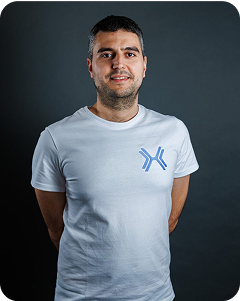
CEO and co-founder of xHeal. His four-year search for answers about his own health led him to build a clearer way to connect health records, wearable trends and everyday observations. He writes from his experience as a founder and xHeal user.
View full bio →Keep reading
The Sleep-Stress-Nutrition Triangle: Why Tracking One Metric Isn't Enough
Your sleep affects your stress. Your stress affects your nutrition. Your nutrition affects your sleep. Here's why the cycle matters and how to break it.
Trifon GetsovFeb 12, 2026
What Does HRV Mean? Heart Rate Variability Explained for Real People
Learn what heart rate variability measures, why your own baseline matters and where wearable trends fall short.
Trifon GetsovFeb 10, 2026
xHeal v2 Launches on iOS in the EU and US
The new xHeal experience brings your daily Snapshot, routines, Timeline, chat, reports, nutrition, workouts, and mindfulness into one iOS app.
 xHeal TeamJul 20, 2026