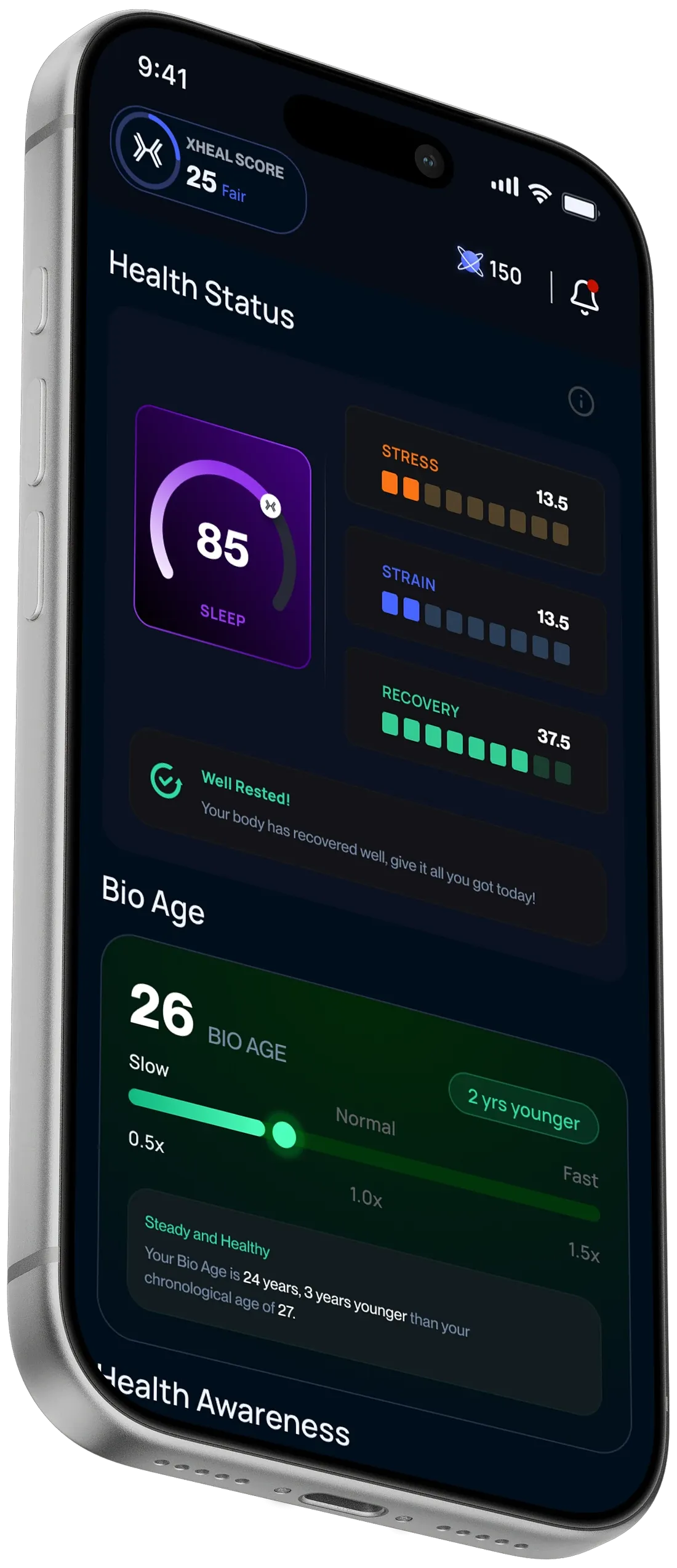
Flare-Up Awareness: 10 Helpful Updates for Day-to-Day Health


Here are ten topics for keeping a useful health history and understanding the limits of wearable observations. Use them to prepare questions alongside your care team's plan.
1. Wearable research can add context around flares
A prospective rheumatoid arthritis wearable study found that heart rate, resting heart rate, HRV patterns, and activity differed around flares, with several metrics changing before flare onset. The timing varied, and the findings do not create a universal alert threshold. See our guide to interpreting early flare signals for the practical context.
2. Gut health remains central to inflammation management
The gut barrier and microbiome interact with immune and inflammatory pathways. A review of gut microbiota, intestinal permeability, and systemic inflammation describes links with several metabolic and autoimmune diseases, while emphasizing that mechanisms and effective interventions remain an active research area.
3. Stress management is measurable, not just something you feel
Chronic stress can affect autonomic and inflammatory pathways. HRV can add an objective trend to subjective stress tracking, but it is not a direct cortisol measurement or a stand-alone measure of whether a stress-management practice is working.
4. Sleep quality matters more than sleep quantity
It's not just about time in bed. Sleep continuity and quality can add context that total sleep duration misses. Research links sleep disturbance with inflammatory markers, but no universal wearable sleep-efficiency threshold predicts next-day symptoms across chronic conditions.
5. Seasonal patterns need context
Some chronic conditions and some individuals show seasonal variation. Tracking symptoms alongside temperature, humidity, and barometric pressure can help test for a personal pattern, but weather effects are often small and should not be assumed in advance.
6. Medication timing affects efficacy more than most people realize
Medication instructions depend on the specific medicine and person. Keep a current list and ask your prescriber or pharmacist about timing, food instructions and possible interactions. Do not change a schedule based on a wearable trend.
7. Exercise recovery windows vary by condition
For people managing chronic conditions, the standard "48 hours between workouts" guideline doesn't always apply. Some conditions require longer recovery periods, and these windows can change with disease activity. Tracking recovery metrics (HRV, resting heart rate, sleep quality) gives a personalized recovery indicator.
8. Lab monitoring frequency should match your condition's pace
Testing frequency depends on the condition, treatment and clinical question. Agree a monitoring plan with your care team and keep the original results with their dates. There is no single testing schedule appropriate for everyone.
9. Social connection affects inflammation directly
A systematic review and meta-analysis found that social isolation and loneliness may be linked with some markers of systemic inflammation, but results were mixed and methodologically heterogeneous. Social connection matters for health without reducing the relationship to a single biological pathway.
10. Your data patterns become more valuable over time
The most useful health insights come from longitudinal data. A single HRV reading tells you very little; repeated readings alongside symptoms, labs, and lifestyle inputs provide context. If you're just starting to track, consistency matters more than collecting every possible metric. For a broader research and wearable overview, revisit our January health intelligence roundup.
Medical disclaimer: This content is for informational purposes only and does not constitute medical advice. Always consult your healthcare provider before making changes to your health routine, medications, or treatment plan. xHeal is a health tracking and awareness tool, not a diagnostic or treatment platform.
Keep reading

Flare-Up Warning Signs: Wearable Research and Its Limits
Research has found changes around some rheumatoid arthritis flares. Learn why these findings do not establish a prediction window and how to keep useful symptom context.
 Trifon GetsovFeb 20, 2026
Five Things to Record Around a Symptom Flare
Keep sleep, daily stress, medication details and other context with your symptom history. A practical way to prepare questions without assuming a cause.
Trifon GetsovFeb 17, 2026Health Information Roundup: Reading Trends with Context
An updated guide to interpreting wearable estimates, noting changes in tracking and bringing health questions to your care team.
xHeal TeamJan 15, 2026